
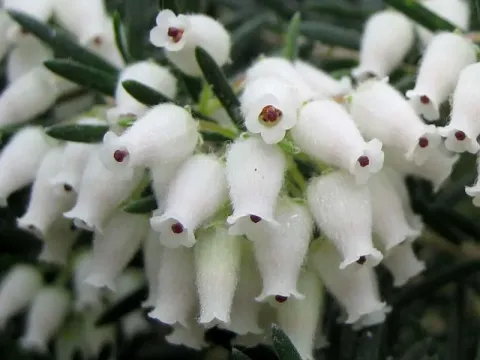
Erica caffra
Erica caffra
Erica caffra is an evergreen shrub or small tree belonging to the Ericaceae family. Originating from South Africa, this plant is naturally found in coastal areas and along watercourses, which defines its preference for specific moisture regimes.
What the section contains
Erica caffra
The plant requires full sun to partial shade and thrives in well-drained, acidic soils. Providing excellent drainage is critical to preventing root rot, as this species is particularly sensitive to waterlogged environments and heavy, clay-based substrates.
Climate-wise, Erica caffra prefers mild conditions. While it can withstand occasional light frosts, it is not fully hardy in severe cold climates, often requiring sheltered positioning or container management in colder regions.
Maintenance involves regular watering during dry spells, ensuring the root ball remains moist but never saturated. Annual pruning after the flowering season is essential to encourage compact growth and maintain the shrub's aesthetic shape.
In landscaping, this species is highly valued for its elegant, bell-shaped flowers and dense foliage. It is commonly used in rock gardens, borders, and heath-themed landscape designs to provide structure and color throughout the year.
The primary threats to Erica caffra are fungal pathogens, specifically those causing root and crown rot. These diseases are most prevalent in soils with poor aeration or excessive moisture accumulation during the colder months.
Pests such as spider mites and mealybugs can pose a significant challenge, especially in sheltered or greenhouse environments. These insects target the foliage, sucking nutrients and causing the plant to weaken if not treated promptly.
Chlorosis, resulting from an unsuitable soil pH or nutrient deficiency, often manifests as yellowing leaves. Using fertilizers formulated specifically for acid-loving plants is necessary to keep the foliage vibrant and healthy.
Environmental stress, particularly cold damage, can compromise the plant's immune system, making it more susceptible to opportunistic infections. Proper winter protection is a mandatory measure in temperate climates.
Integrated pest management and strictly controlled irrigation schedules are the best practices for preventing disease outbreaks. Monitoring the plant for early signs of stress ensures long-term viability and ornamental quality.