
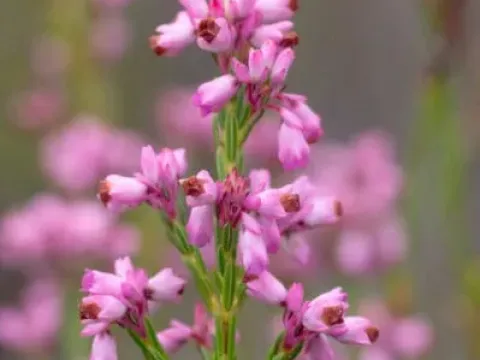
Erica corifolia
Erica corifolia
Erica corifolia is a perennial evergreen shrub belonging to the Ericaceae family. It is recognized for its slender, foliage-covered stems and delicate flowers that bloom in characteristic clusters, making it a desirable specimen for specialized gardens.
What the section contains
Erica corifolia
Originating from South Africa, this species thrives in environments that offer mild temperatures and specific soil conditions. As a cultivated plant, it requires an environment that mimics the acidic, sandy conditions of its native habitat.
The success of growing Erica corifolia depends primarily on soil pH. It strictly requires acidic soil conditions; any alkalinity will lead to iron deficiency, resulting in severe chlorosis of the foliage and eventual decline of the plant.
Moisture management is a critical aspect of its agrotechnology. While the plant requires consistent moisture to thrive, it cannot tolerate waterlogging. A well-draining soil mix, typically consisting of peat, sand, and pine bark, is essential for root health.
In terms of climate, it performs best in regions where temperatures do not fluctuate to extremes. In frost-prone areas, it is recommended to provide protection or cultivate the plant in containers that can be moved to a sheltered environment during winter.
The most significant threat to the health of Erica corifolia is root rot, typically caused by Phytophthora species. This occurs predominantly in stagnant or poorly aerated soils, necessitating strict adherence to drainage protocols.
Insect pests, particularly spider mites, can become problematic during hot and dry spells. These pests colonize the undersides of the leaves, causing them to yellow and drop if left untreated, thereby weakening the shrub significantly.
Preventive measures include maintaining appropriate spacing between individual plants to promote airflow, which effectively reduces the incidence of fungal pathogens such as powdery mildew.
Integrated pest management should be employed, prioritizing early detection. When chemical intervention is necessary, use only fertilizers and pesticides specifically labeled as safe for Ericaceous plants to avoid toxicity.
- Regular monitoring of foliage color.
- Application of specialized acid-loving plant fertilizers.
- Pruning after flowering to maintain shape.
- Mulching with organic coniferous material.
- Proper selection of irrigation water (low salinity).