
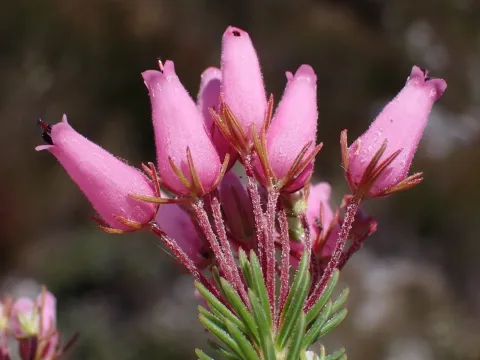
Erica doliiformis
Erica doliiformis
Erica doliiformis is a perennial evergreen shrub belonging to the Ericaceae family. Native to the Cape Floristic Region of South Africa, this plant is well-adapted to the unique and often harsh environmental conditions of fynbos ecosystems, where it thrives in well-drained, nutrient-poor, acidic soils.
What the section contains
Erica doliiformis
The plant is distinguished by its compact growth habit and barrel-shaped flowers, which give the species its specific name. The foliage consists of tiny, needle-like leaves arranged densely along the stems, an adaptation meant to minimize water loss through transpiration in windy mountain regions.
Agronomic success with this species requires strict adherence to soil chemistry. It demands an acidic substrate with high drainage capacity. In cultivation, a mix of peat moss, pine bark, and coarse horticultural sand is recommended to replicate the structure of the soil in its natural habitat.
Regarding climate, this plant is sensitive to temperature extremes and requires a stable, mild environment. It thrives best in locations with high light intensity but protected from intense, direct heat and dry winds, which can quickly desiccate the plant's fine root system.
The primary horticultural application of Erica doliiformis is as an ornamental plant in specialized collections, heath gardens, and controlled environment greenhouses. It is particularly valued by gardeners for its unusual flower architecture and long-lasting display during the flowering season.
The most significant pathological threat to this culture is root rot, particularly caused by Phytophthora species. This often occurs when irrigation schedules are ignored, leading to waterlogged soil conditions that prevent oxygen from reaching the delicate roots of the heath plant.
Pests such as spider mites and mealybugs can pose a threat, particularly in glasshouse conditions where air circulation might be limited and humidity levels fluctuate. Regular monitoring and the application of suitable miticides or systemic insecticides are key to maintaining plant health.