
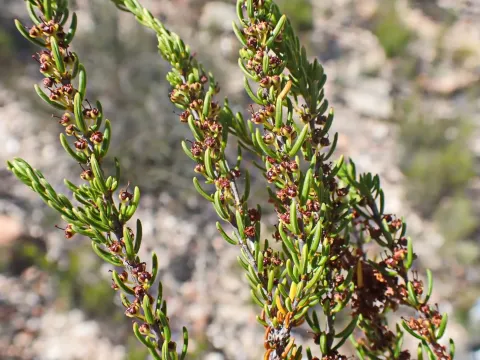
Erica coarctata
Erica coarctata
Erica coarctata is a perennial evergreen shrub belonging to the Ericaceae family. Known for its distinct growth pattern and dense foliage, this species is highly valued in specialty gardening for its ornamental properties and ability to thrive in specific environmental niches.
What the section contains
Erica coarctata
Originating from regions with cool, humid climates, this plant has adapted to survive in environments characterized by acidic soil and high atmospheric moisture. Understanding these evolutionary roots is essential for any successful attempt to cultivate the plant outside of its natural habitat.
The substrate requirements are strict: the soil must be acidic, with a pH typically ranging between 4.0 and 5.5. High-quality drainage is non-negotiable, as the root system of Erica coarctata is highly sensitive to hypoxia caused by waterlogging, which often leads to rapid decay.
Regarding climate, the plant prefers locations with moderate exposure to sunlight. While it thrives in open areas, protection from harsh, dry winds is necessary to prevent winter burn and desiccation of the delicate foliage during the colder months of the year.
Maintenance practices focus heavily on irrigation and soil chemistry management. Using deionized or rainwater is recommended to prevent soil alkalinity, and applying a thick layer of organic mulch helps retain moisture while reinforcing the acidic profile of the rhizosphere.
The primary threats to Erica coarctata include soil-borne fungal pathogens, such as Phytophthora species. These infections are often triggered by improper moisture management, emphasizing the need for perfectly balanced drainage and aeration in the cultivation area.
Pest pressure is frequently dominated by spider mites and scale insects. These pests can cause significant damage by depleting plant nutrients, leading to yellowing of the leaves and stunted growth. Early detection through regular visual inspections is crucial for effective control.
Cultural control methods, such as maintaining adequate plant spacing to promote airflow, are highly effective in preventing fungal outbreaks. If fungal symptoms appear, the removal and destruction of affected parts, followed by targeted fungicide applications, are the standard remedial steps.
For pest management, integrated pest management (IPM) strategies are preferred. This involves using biological controls where possible or systemic insecticides during the active growth phase, ensuring the safety of beneficial fauna while mitigating the impact of destructive insects.
Consistent monitoring of plant vigor and foliage color serves as an early warning system for agronomic issues. If symptoms of stress appear, evaluating the soil's pH and moisture content should always be the first priority before resorting to chemical intervention strategies.