
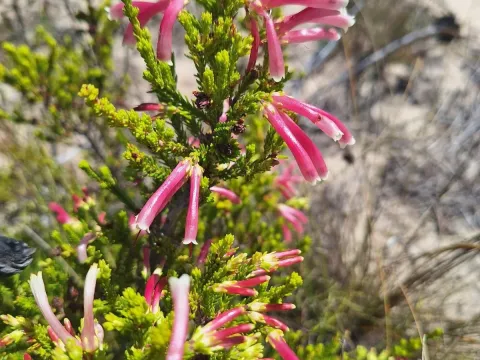
Erica discolor
Erica discolor
Erica discolor, commonly known as the mottled heath, is a flowering shrub belonging to the Ericaceae family. It is native to the diverse flora of the Cape Province in South Africa, where it thrives in specialized environmental niches characterized by well-drained, nutrient-poor, acidic soils.
What the section contains
Erica discolor
The plant is recognized for its distinctive long, tubular flowers that display a gradient of colors, typically ranging from bright orange at the base to greenish or reddish tips. Its foliage consists of fine, needle-like leaves that are evergreen, ensuring the plant maintains a structured appearance throughout the seasons.
To successfully cultivate this species, it is essential to replicate its natural soil conditions. The ideal substrate must have a low pH, typically between 4.5 and 5.5, and provide excellent drainage. Any presence of lime or high alkalinity will lead to nutrient lockout and the rapid decline of the plant.
Erica discolor requires a position in full sun to partial shade, depending on the intensity of the local climate. While it is hardy in its native habitat, agricultural management in temperate zones requires protection from frost and freezing temperatures, often necessitating greenhouse or indoor cultivation.
From a horticultural perspective, this species is highly valued for its ornamental appeal in specialized gardens. It is frequently employed in alpine rockeries and landscape designs that focus on ericaceous plants, providing a unique texture and vibrant color contrast to more common garden shrubs.
The primary threat to the health of Erica discolor is root rot, typically caused by Phytophthora or other soil-borne fungi. This condition is almost always a result of waterlogged soil, which occurs when drainage systems are inadequate or when irrigation is poorly managed.
Pest pressures often include scale insects and spider mites, which thrive in environments where air circulation is poor and humidity levels fluctuate significantly. These pests feed on the sap, causing the needles to yellow and drop prematurely, eventually weakening the entire shrub.
Physiological disorders such as chlorosis occur frequently when the irrigation water has a high mineral content, leading to a rise in soil pH. Maintaining a strict regimen of using soft or rainwater is a critical agronomic practice to keep the iron and other trace nutrients available to the roots.
Fungal leaf spots and powdery mildew can also occur if the foliage remains constantly damp in stagnant air. Ensuring the plants are spaced correctly and positioned to benefit from natural air movement significantly lowers the risk of these common infections.
Integrated pest management, including regular sanitation and the early removal of infested branches, is the most effective approach for maintaining healthy populations. Fungicidal applications may be necessary during periods of high humidity to prevent the rapid spread of spores among densely planted groups.