
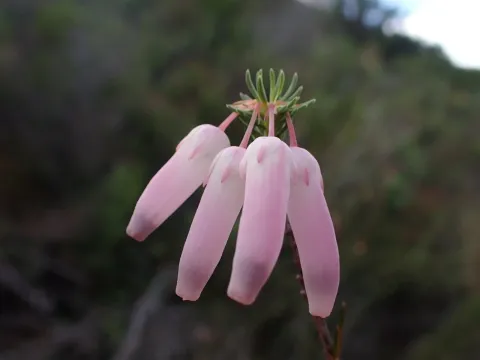
Erica bauera
Erica bauera
Erica bauera is an evergreen shrub species belonging to the Ericaceae family. Originating from the diverse landscapes of South Africa, this plant has adapted to Mediterranean-type climates, thriving in open, well-drained habitats that mimic its natural environment.
What the section contains
Erica bauera
Botanically, the plant features narrow, needle-like foliage densely covering upright stems, which provide a textured aesthetic year-round. Its most notable feature is the array of tubular flowers, often white or soft pink, that provide a classic look to any heath garden.
Cultural success depends heavily on soil chemistry, as this species requires acidic soil with a pH ranging from 4.5 to 5.5. The potting mix or garden soil must be high in organic matter, such as peat or pine bark, to ensure proper acidity and drainage.
Erica bauera demands full sun to maintain its compact habit and prolific flowering. Shady conditions will result in leggy growth and reduced bud formation, making the plant significantly less attractive and more prone to structural collapse.
Watering requires a balanced approach; the soil should be kept consistently moist but never waterlogged. Using lime-free water is essential, as calcium buildup in the soil can quickly lead to chlorosis and the eventual decline of the shrub.
Fungal diseases are the primary threat, particularly Phytophthora root rot, which is triggered by stagnant moisture in the root zone. Proper site selection and elevated planting are crucial preventative measures for long-term survival.
Pests such as spider mites and mealybugs are common, especially in hot, dry environments. These insects sap the plant's vitality, leading to discolored leaves and overall stress, which can make the plant susceptible to secondary infections.
Scale insects can also infest the stems of the plant, often going unnoticed until significant damage is done. Regular manual inspection and the use of horticultural oils can help manage these populations effectively.
In poor air circulation scenarios, powdery mildew may develop, appearing as a white dusting on the foliage. Pruning the shrub to allow better airflow and ensuring it is not overcrowded is the best way to prevent such outbreaks.
Root-knot nematodes can also pose a serious risk to the root system, causing stunted growth and poor nutrient uptake. Sterilizing the growing medium before planting and using healthy, nursery-grown stock are essential protocols for home gardeners.