
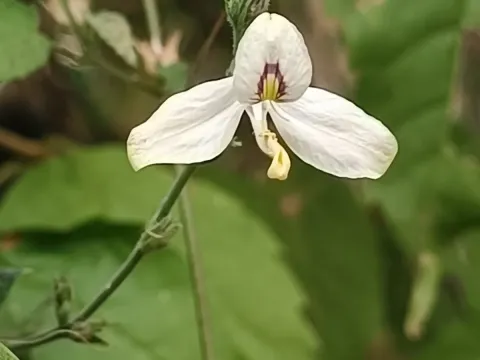
Carlowrightia
Carlowrightia
Carlowrightia is a genus of perennial shrubs and subshrubs belonging to the Acanthaceae family. These plants are evolutionarily adapted to survive in environments characterized by limited moisture and intense solar radiation, making them specialized desert inhabitants.
What the section contains
 Carlowrightia arizonica
Carlowrightia arizonica
Carlowrightia arizonica
 Carlowrightia linearifolia
Carlowrightia linearifolia
Carlowrightia linearifolia
 Carlowrightia parviflora
Carlowrightia parviflora
Carlowrightia parviflora
 Carlowrightia parvifolia
Carlowrightia parvifolia
Carlowrightia parvifolia
 Carlowrightia serpyllifolia
Carlowrightia serpyllifolia
Carlowrightia serpyllifolia
 Carlowrightia torreyana
Mexican carlowrightia
Carlowrightia mexicana
Carlowrightia torreyana
Carlowrightia torreyana
Mexican carlowrightia
Carlowrightia mexicana
 Texas tubetongue
Carlowrightia texana
Texas tubetongue
Carlowrightia texana
Carlowrightia
The natural range of this genus spans the arid regions of North and Central America, specifically throughout the southern United States and northern Mexico. They are commonly found in rocky substrates, arid slopes, and desert scrub communities, displaying significant resilience to extreme thermal fluctuations.
Botanically, the culture is distinguished by slender, often branched stems and small foliage, which serves as a physiological adaptation to reduce water loss via transpiration. The flowers exhibit the characteristic morphology typical of the Acanthaceae family, often displaying white to pale lavender coloration.
Successful cultivation requires well-draining sandy or gravelly soils with minimal organic matter. The plant is extremely susceptible to root rot caused by stagnant moisture; therefore, selecting a site with natural slope or engineered drainage is a critical requirement for any successful management plan.
The primary economic and agricultural use of Carlowrightia is within the field of xeriscaping and sustainable landscape design. Its inherent drought tolerance makes it a valuable candidate for greening arid urban and suburban environments where water conservation is a top priority.