
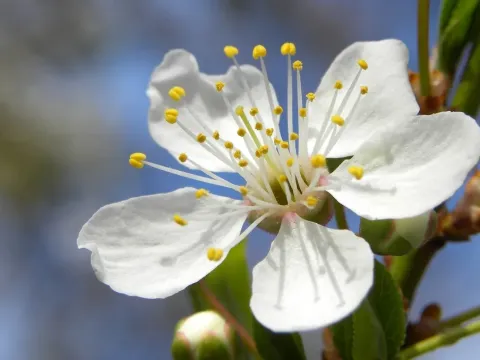
Purple-leaf sand cherry
Prunus x cistena (N. E. Hansen) Koehne
The Purple-leaf sand cherry, known botanically as Prunus x cistena, is a deciduous shrub in the Rosaceae family. It is a hardy hybrid resulting from a cross between the sand cherry and the cherry plum.
What the section contains
Purple-leaf sand cherry
This shrub requires full sun exposure to maintain its characteristic deep reddish-purple foliage. In shaded areas, the leaves tend to turn green, which significantly reduces the plant's decorative appeal.
The species thrives in well-drained, fertile soil. It is relatively drought-tolerant once established but performs best when provided with consistent moisture during prolonged dry spells in the growing season.
Routine pruning is essential for maintaining a compact and dense habit. It is best to prune immediately after flowering to stimulate new growth, which displays the most intense color.
In landscaping, it is widely utilized for its striking contrast in mixed borders or as a small specimen plant. Its slow growth rate makes it manageable for smaller urban garden environments.
The most significant disease threat is blossom blight, caused by Monilinia fungi, which can severely affect the shrub during humid spring weather. Early intervention with fungicides is recommended.
Shot hole disease and leaf spot are common fungal issues resulting in perforated or discolored leaves. Sanitation, such as removing fallen leaves in autumn, is a critical step in managing these infections.
Pests such as aphids and scale insects are frequently encountered on the succulent new growth. Integrated pest management, including horticultural soaps or systemic insecticides, should be employed if infestations occur.
The pear slug (cherry slug) may skeletonize the leaves during mid-summer. Monitoring for these larvae is important, as they can cause rapid and noticeable damage to the foliage density.
Preventative care through proper site selection is the best defense. Ensuring adequate air circulation around the shrub significantly lowers the incidence of foliage diseases throughout the year.