
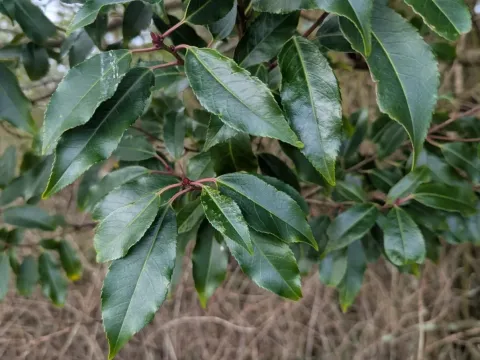
Portuguese laurel
Prunus lusitanica L.
Portuguese laurel, or Prunus lusitanica, is a versatile evergreen shrub belonging to the Rosaceae family. Native to southwestern Europe, particularly Portugal and Spain, this plant is highly regarded for its glossy, dark green foliage and spikes of small, fragrant white flowers that appear in early summer.
What the section contains
Portuguese laurel
Botanically, it is characterized by its reddish stems and leathery leaves that maintain a vibrant appearance throughout the year. It serves as both a hedge plant and an ornamental shrub, capable of reaching significant heights if left unpruned in ideal conditions.
The plant thrives in fertile, well-draining soils with a neutral or slightly acidic pH. It performs best in partial shade, although it can tolerate full sun if provided with adequate soil moisture. It is essential to choose a sheltered site to protect it from harsh, drying winds in winter.
A consistent moisture level is critical for the establishment of young specimens. While somewhat drought-tolerant once mature, it prefers high humidity environments and consistent water access, making it a popular choice for coastal garden designs.
In landscaping, Portuguese laurel is highly valued for its tolerance to pruning, which makes it ideal for topiary, formal hedges, or as a dense privacy screen. Its robust nature allows it to recover quickly after shearing, ensuring a tidy and well-maintained look for year-round aesthetics.
Powdery mildew is a common issue for this species, particularly in locations with high humidity and poor air circulation. Proper spacing between individual plants is the primary cultural practice used to reduce the risk of this fungal infection.
Scale insects are a significant pest that can weaken the plant by feeding on sap. Infestations often go unnoticed until the plant shows signs of chlorosis or stunted growth. Horticultural oils or systemic insecticides are effective for managing these populations.
Vine weevil larvae represent a potential underground threat, as they feed on the roots of containerized or young plants. Checking the root zone and using biological controls or specialized treatments can mitigate the damage caused by these insects.
Root rot, caused by various species of Phytophthora, is typically a result of waterlogged soil conditions. Ensuring excellent drainage through the use of organic amendments and proper planting depth is the best defense against these lethal soil-borne pathogens.
Nutrient deficiencies, specifically nitrogen or iron, can cause leaves to fade or yellow. A balanced fertilizer applied in early spring, combined with soil testing to adjust pH levels, is recommended to ensure strong growth and deep foliage color throughout the season.