
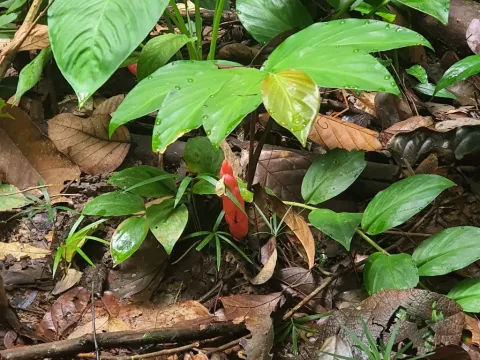
Griffith's ginger
Zingiber griffithii
Griffith's ginger (Zingiber griffithii) is a perennial herbaceous plant belonging to the Zingiberaceae family. Native to the tropical regions of Southeast Asia, this plant is known for its decorative appearance and aromatic rhizomes typical of the ginger group.
What the section contains
Griffith's ginger
The plant thrives in warm, humid tropical conditions. In a controlled cultivation environment, it requires a steady temperature range between 22 and 28 degrees Celsius, mimicking its natural habitat in the understory of dense forests.
Soil requirements focus on high organic matter content and excellent drainage. A loose, well-aerated substrate is essential to ensure that the rhizomes can develop properly without the risk of suffocation or decay due to excessive moisture retention.
Regarding light exposure, Griffith's ginger prefers bright but indirect light. Direct tropical sun can cause severe leaf scorch, so shaded environments or dappled light conditions are highly recommended for optimal plant health.
Agrotechnical practices involve consistent moisture management, ensuring the soil remains damp but never waterlogged. Fertilization with balanced, nutrient-rich compounds during the peak growing season supports the expansion of the rhizome system.
Fungal infections are the most significant threat to this crop. Species such as Pythium and Fusarium can quickly compromise the rhizome, especially if the drainage systems are inadequate or if the soil remains constantly saturated.
Spider mites represent a major pest issue in indoor or greenhouse cultivation, particularly when humidity levels drop below the threshold required by the plant. They cause discoloration and structural damage to the foliage.
Scale insects are another common concern, often hiding on the undersides of leaves or along the stem. Their presence reduces the plant's vigor and may lead to the development of secondary mold infections due to honeydew secretion.
Root-knot nematodes can severely inhibit the growth of Griffith's ginger by damaging the root system's ability to absorb water and essential nutrients. This damage is often irreversible, highlighting the need for sterile growing media.
The primary control method involves strict adherence to sanitation protocols, such as removing infected plant parts immediately and maintaining proper airflow to reduce the incidence of moisture-related pathogens.