
Globba andersonii
Globba andersonii
Description
Growing requirements
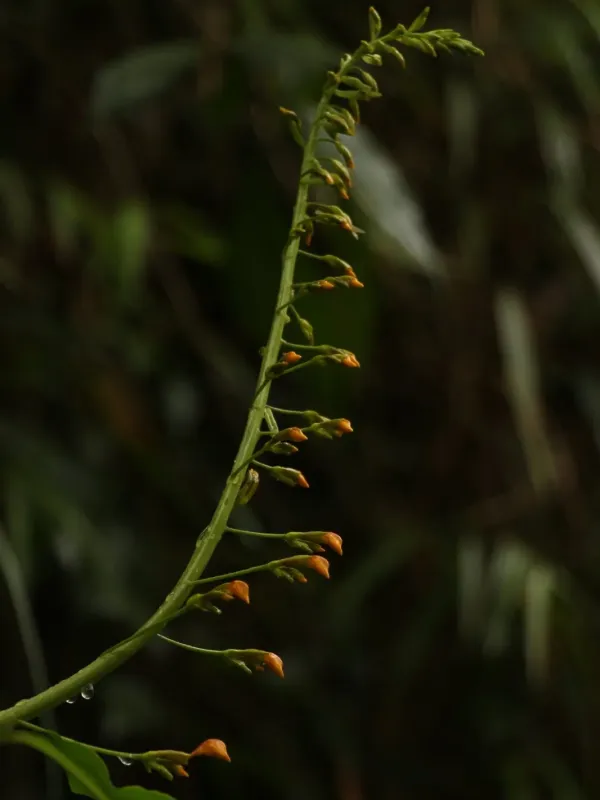
Globba andersonii is a perennial herbaceous plant belonging to the Zingiberaceae family. Native to the tropical forest regions of the Himalayas and North-East India, this plant is primarily valued for its unique inflorescences and cascading foliage.
Optimal cultivation requires a tropical climate with temperatures strictly maintained between 20°C and 28°C. The plant exhibits high sensitivity to thermal fluctuations and should be sheltered from cold drafts to prevent physiological stress.
The growth medium must be well-drained, porous, and nutrient-rich. A mixture of peat moss, leaf compost, and coarse sand provides the necessary structure to prevent compaction and allow for healthy rhizome development.
Regarding light, this species requires bright, filtered light conditions. Excessive direct sunlight can cause leaf scorching and irreversible damage to the sensitive bracts, while low light levels result in leggy growth and failed flowering.
Watering practices must be disciplined, focusing on maintaining consistent moisture without waterlogging. During the growing season, high humidity is essential; misting or the use of automated humidification systems is recommended to ensure environmental stability.
Main diseases and pests
Pest management is focused on controlling common greenhouse threats such as spider mites and scale insects. These pests often proliferate in dry air conditions, emphasizing the importance of humidity control as a primary preventive measure.
Root pathogens and fungal rots represent the most significant threat to the rhizome system. These issues are typically caused by irrigation errors or improper soil drainage, necessitating the use of systemic fungicides if the substrate becomes compromised.