
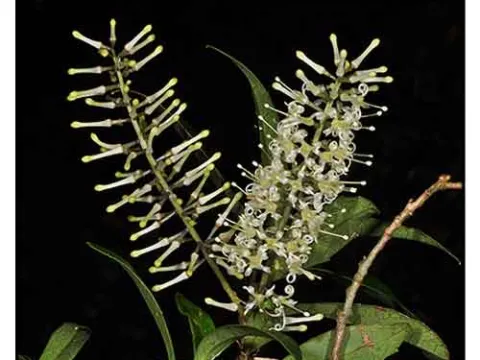
Helicia
Helicia
Helicia is a genus of evergreen trees and shrubs belonging to the Proteaceae family. Naturally found in the rainforests of Southeast Asia and Australia, these plants are highly adapted to humid tropical environments.
What the section contains
 Helicia attenuata
Helicia attenuata
Helicia attenuata
 Helicia ceylanica
Helicia ceylanica
Helicia ceylanica
 Helicia cochinchinensis
Helicia cochinchinensis
Helicia cochinchinensis
 Helicia excelsa
Helicia moluccana
Helicia moluccana
Helicia excelsa
Helicia excelsa
Helicia moluccana
Helicia moluccana
 Helicia nilagirica
Helicia petiolaris
Helicia petiolaris
Helicia pyrrhobotrya
Helicia pyrrhobotrya
Helicia nilagirica
Helicia nilagirica
Helicia petiolaris
Helicia petiolaris
Helicia pyrrhobotrya
Helicia pyrrhobotrya
 Helicia robusta
Helicia rufescens
Helicia rufescens
Helicia serrata
Helicia serrata
Helicia robusta
Helicia robusta
Helicia rufescens
Helicia rufescens
Helicia serrata
Helicia serrata
Helicia
The culture thrives in well-drained, acidic soils rich in organic matter. Optimal growth occurs in temperatures ranging from 20°C to 30°C, with no tolerance for frost or prolonged cold spells. It requires consistent rainfall or irrigation to maintain soil moisture.
Botanically, Helicia is distinguished by its leathery, spirally arranged leaves and raceme-like inflorescences. The flowers often emit a pleasant fragrance, facilitating pollination by local insects in the dense forest canopy.
In terms of agricultural practice, cultivation requires site selection that mimics the native forest floor environment. Protection from strong winds is essential, as the branches and foliage can be susceptible to mechanical damage in exposed areas.
Economically, some species are cultivated for their timber, which is valued for its durability and grain, or for their seeds, which contain edible oils. Increasingly, the genus is recognized for its ornamental value in tropical landscaping.
Root rot, primarily caused by waterlogged soil conditions, represents the most significant threat to the health of Helicia plants. Proper drainage systems are critical to preventing fungal colonization of the root system.
Leaf spot diseases are common in high-humidity environments, especially when airflow around the canopy is restricted. Pruning practices should focus on maintaining open structures to allow for better air circulation and light penetration.
Insects such as scale insects and various mites often prey on the tender growth of saplings. Integrated pest management strategies, focusing on biological control agents, are preferred to maintain the delicate ecological balance.
Stem borers pose a specific risk to mature trees, potentially causing structural instability or dieback. Regular inspections of the bark and trunk for entry holes can help identify infestations at an early stage.
Adhering to proper nutrient management and soil pH monitoring is crucial for long-term health. Stress-free plants demonstrate higher resistance to both fungal and insect pressures, ensuring productive tree longevity.