
Helicia excelsa
Helicia excelsa
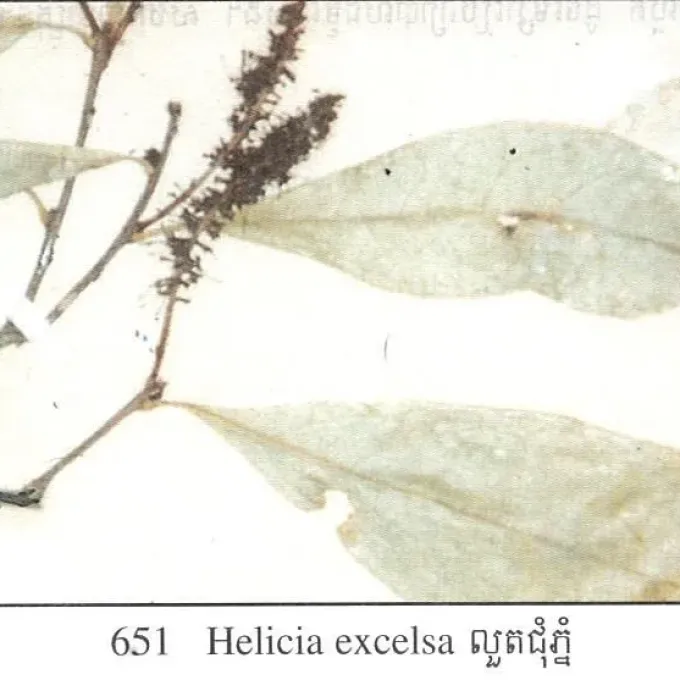
Description
Growing requirements
Helicia excelsa is a notable species within the Proteaceae family, indigenous to the tropical rainforests of Southeast Asia. It typically thrives in the understory or sub-canopy layers of dense evergreen forests.
For successful cultivation, the species requires deep, well-drained, and nutrient-rich soils. The plant is particularly sensitive to soil compaction and waterlogging, necessitating excellent drainage in agricultural or managed settings.
The climatic profile for this tree includes high year-round temperatures and consistently high humidity. It lacks significant cold tolerance and will exhibit stunted growth or mortality if exposed to temperatures consistently below 15 degrees Celsius.
Botanically, Helicia excelsa is characterized by its robust, leathery foliage and elongated racemes. The structural development of the tree is relatively slow, reflecting its adaptation to the low-light environments of its native habitat.
Economically, the species is valued for its potential in timber production and for its ornamental role in landscaping projects across tropical climates. Ongoing research focuses on optimizing its growth cycle for sustainable forest management.
Main diseases and pests
Root rot pathogens are the most significant biological threats to this species, especially when cultivated in nurseries with inadequate ventilation. These fungi proliferate rapidly in warm, damp environments.
Various coleopteran pests, including certain species of wood-boring beetles, can compromise the structural integrity of the trunks. Regular monitoring is necessary to detect infestations before they cause irreversible damage.
Environmental stress, such as prolonged drought or extreme soil salinity, can significantly weaken the trees, making them more susceptible to opportunistic pathogens. Proper irrigation management is vital during dry seasons.
- Regular pruning of dead or diseased branches
- Monitoring for leaf-eating insects
- Maintaining optimal canopy ventilation
- Limiting the use of broad-spectrum pesticides
Sustainable cultivation requires a focus on soil microbial health to support the tree's natural defense mechanisms. Promoting biodiversity within the planting area helps to naturally mitigate the impact of localized pest outbreaks.