
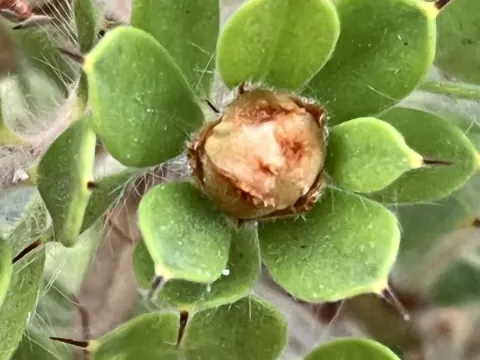
Hakea
Hakea
Hakea is a genus of evergreen shrubs and small trees belonging to the Proteaceae family. Originating from Australia, these plants have evolved to thrive in diverse environments, ranging from coastal areas to dry inland regions.
What the section contains
 Grass-leaf hakea
Hakea multilineata
Grass-leaf hakea
Hakea multilineata
 Hakea arborescens
Hakea arborescens
Hakea arborescens
 Hakea baxteri
Hakea baxteri
Hakea baxteri
 Hakea bucculenta
Hakea bucculenta
Hakea bucculenta
 Hakea corymbosa
Hakea corymbosa
Hakea corymbosa
 Hakea decurrens
Hakea decurrens
Hakea decurrens
 Hakea drupacea
Hakea drupacea
Hakea drupacea
 Hakea gibbosa
Hakea gibbosa
Hakea gibbosa
 Hakea oleifolia
Hakea oleifolia
Hakea oleifolia
 Hakea propinqua
Hakea propinqua
Hakea propinqua
 Hakea prostrata
Hakea prostrata
Hakea prostrata
 Hakea victoria
Hakea victoria
Hakea victoria
 Needle Needlewood
Hakea lissosperma
Needle Needlewood
Hakea lissosperma
 Silky hakea
Hakea sericea
Silky hakea
Hakea sericea
 Small-fruited Hakea
Hakea microcarpa
Small-fruited Hakea
Hakea microcarpa
 Warty-fruited hakea
Hakea verrucosa
Warty-fruited hakea
Hakea verrucosa
Hakea
Botanically, Hakea is distinguished by its sclerophyllous, often needle-like foliage designed to conserve water under harsh environmental stress. The inflorescences are distinct and often showy, with unique floral structures that play a crucial role in reproduction within their native ecosystems.
Agronomically, the primary requirement for successful cultivation is exceptional soil drainage. Hakea plants are highly susceptible to root rot if water lingers around the root zone, making soil preparation the most critical step before planting.
Soil nutrient levels should be carefully monitored, particularly phosphorus, as Proteaceae species are sensitive to high concentrations of this nutrient. A well-drained, slightly acidic to neutral substrate is recommended to ensure optimal development.
Economically, Hakea is highly valued in horticulture for its resilience and decorative potential. It is frequently utilized in xeriscaping, as windbreaks, and as a formal barrier in regions where its specific environmental conditions can be met.
The most significant disease threat for the Hakea genus is root rot, particularly caused by Phytophthora pathogens, which thrive in poorly drained and waterlogged soils.
Pests that may impact the crop include various species of aphids and scale insects, which can weaken the plant by feeding on the sap, requiring vigilance in nursery and field environments.