
Brassia gireoudiana
Brassia gireoudiana
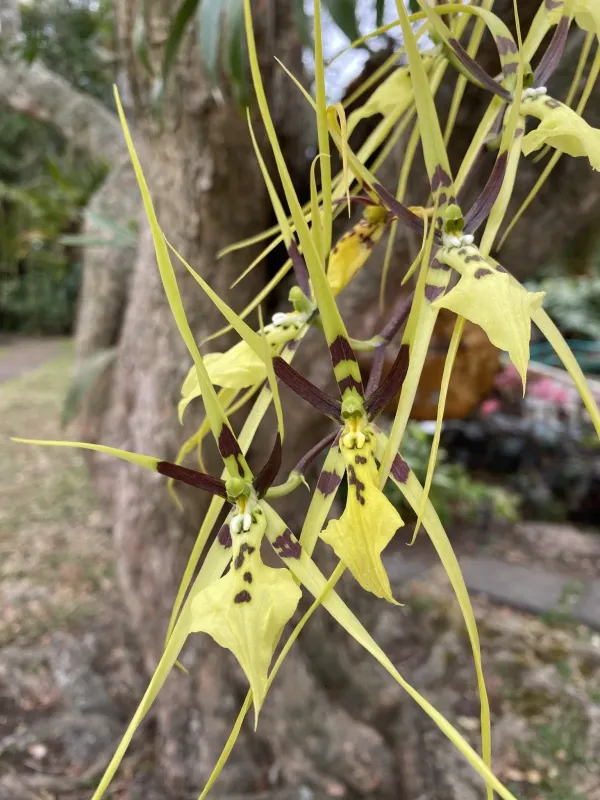
Description
Growing requirements
Brassia gireoudiana is a member of the Orchidaceae family, specifically recognized as an epiphytic orchid. Native to the tropical rainforests of Central America, primarily in Costa Rica and Panama, it thrives on tree trunks where high moisture and air circulation are constant.
Successful cultivation depends on maintaining stable thermal conditions. During the growing season, temperatures between 22°C and 26°C are ideal, while winter dormancy requires cooler nights around 16°C to 18°C. A distinct day-to-night temperature drop is essential to trigger blooming cycles.
Light intensity should be high but diffused. While this plant loves light, direct afternoon sun can damage its sensitive foliage and pseudobulbs. East or west-facing windows with light curtains are typically the best locations for optimal photosynthesis and growth.
The choice of substrate is vital for preventing root suffocation. A coarse mix primarily consisting of pine bark, perlite, and a small amount of charcoal is recommended. This setup ensures that water drains quickly while the roots maintain access to oxygen.
Humidity management is the most challenging aspect of growing this orchid. Maintaining 60% to 80% relative humidity is necessary to prevent dehydration. Using specialized humidifiers or placing the pots on moisture-retentive trays with gravel is highly beneficial for the plant's health.
Main diseases and pests
Pests are a frequent issue in indoor environments, with spider mites and scale insects being the most common. These pests thrive in dry air, so maintaining proper ambient moisture is a natural way to reduce the risk of infestation in your collection.
Root rot caused by stagnant water is the primary disease threat. It is essential to ensure that the potting media dries out slightly between waterings. Implementing proper sanitation and keeping the plant in a well-ventilated area significantly lowers the chances of fungal and bacterial infections.