
Brassia maculata
Brassia maculata
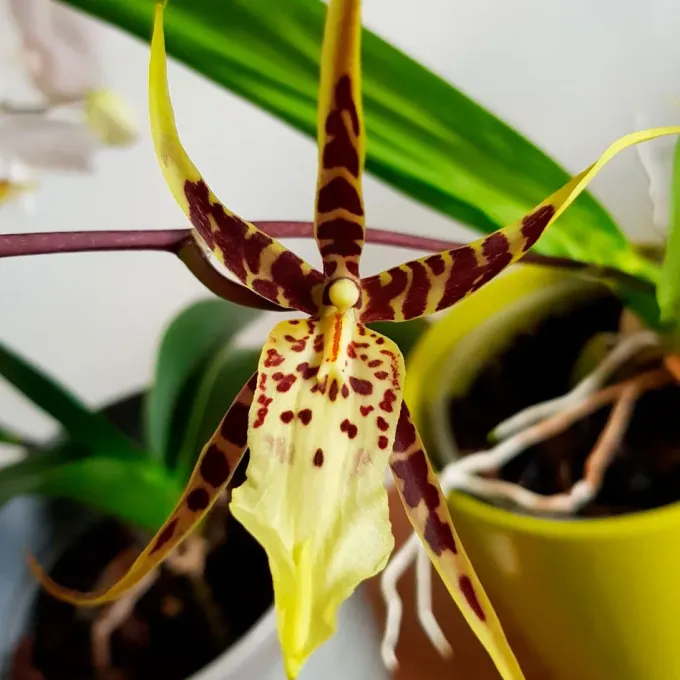
Description
Growing requirements
Brassia maculata is a prominent member of the Orchidaceae family, often referred to as a spider orchid due to the unique shape of its elongated floral segments. Native to the tropical forests of Jamaica and Mexico, this species is an epiphyte that typically grows on tree bark in humid environments.
Botanically, it features a sympodial growth habit with distinct pseudobulbs that store water and nutrients. The leaves are typically long, leathery, and bright green, providing a lush appearance even when the plant is not in its blooming phase.
Cultivation requires bright, indirect light to stimulate flowering. Direct sunlight should be avoided during the peak hours of the day, as it can easily damage the foliage of this delicate tropical plant. Optimal growth temperatures range between 18°C and 25°C.
High relative humidity, ideally between 60% and 80%, is essential for the health of Brassia maculata. In home environments, growers should use misting or dedicated humidifiers, especially during the heating season, to prevent leaf tip dehydration.
The potting medium must be coarse and well-draining, typically consisting of orchid-grade bark, charcoal, and perlite. This mixture ensures the roots remain aerated, which is crucial for an epiphyte that naturally relies on air exposure to survive.
Main diseases and pests
Common pests affecting Brassia maculata include scale insects, mealybugs, and spider mites. These pests thrive in dry conditions and can quickly colonize the undersides of leaves and the junctions of pseudobulbs, draining plant vitality.
Root rot remains the most significant threat to the plant, usually caused by overwatering or using a medium that has decomposed and lost its aeration. Fungal leaf spots can also occur if water is allowed to sit on the foliage for extended periods.
Effective management includes regular inspection and maintaining strict hygiene. Any infected plant parts should be removed promptly with sterilized cutting tools to prevent the spread of localized infections to the rest of the collection.
Using systemic insecticides or miticides may be necessary for severe infestations. However, cultural control, such as improving air circulation and adjusting the humidity levels, is often sufficient to prevent minor outbreaks.
Proper water quality is also a factor; soft water or rainwater is preferred to prevent the buildup of mineral salts in the substrate, which can irritate the sensitive roots and predispose the plant to various physiological stresses.