
Brassia lanceana
Brassia lanceana
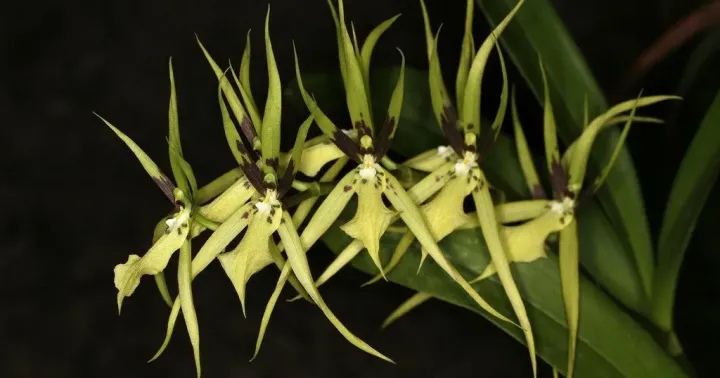
Description
Growing requirements
Brassia lanceana is an epiphytic orchid species belonging to the Orchidaceae family. Naturally occurring in the tropical rainforests of South America, including Brazil and Guyana, it grows attached to tree branches, absorbing moisture and nutrients from the humid environment.
This species exhibits a sympodial growth habit, developing flattened pseudobulbs that serve as water-storage organs. Its leathery, lanceolate leaves emerge from the pseudobulbs, and the root system is adapted to thrive in airy, bark-based substrates rather than soil.
Successful cultivation requires bright but diffused light. Direct sunlight is harmful and can scorch the foliage, so maintaining a proper shading level is crucial for the plant to produce its characteristic spider-like flowers.
The ideal temperature range is between +22°C and +26°C during the growing season. A slight decrease in night temperatures during the winter can help stimulate the plant to bloom, provided the environment remains humid and stable.
Watering should be consistent, allowing the bark-based substrate to partially dry out between sessions. High ambient humidity, ideally above 60%, is essential for this species to thrive, often requiring the use of humidifiers or regular misting in non-tropical climates.
Main diseases and pests
Spider mites and scale insects are the primary pests that affect Brassia lanceana, often appearing when humidity levels fall too low. Early detection and treatment with appropriate horticultural oils are necessary to prevent infestations from damaging the leaves.
Root and bulb rot are the most significant threats to plant health, typically caused by waterlogged substrates or poor air circulation. Proper drainage and allowing the orchid to dry out appropriately are the best preventative measures against fungal pathogens.