
Orange Brassia
Brassia aurantiaca
Description
Growing requirements
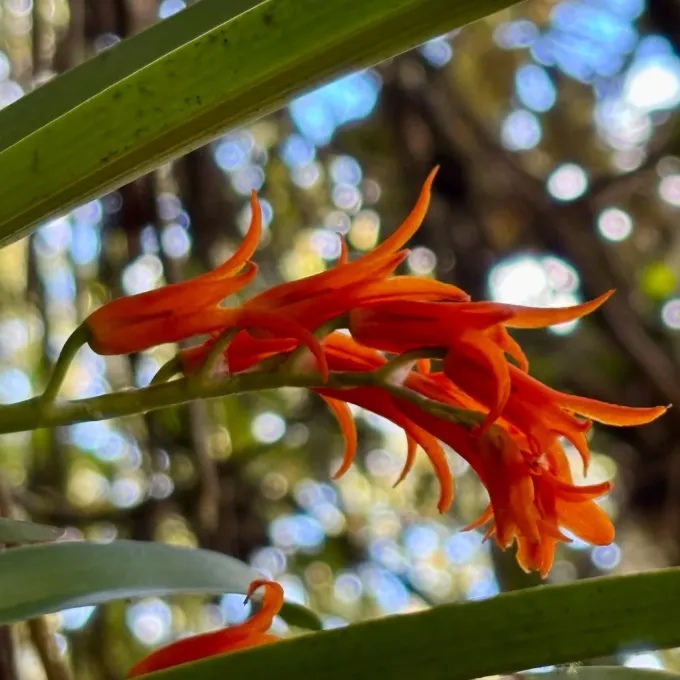
Brassia aurantiaca (often classified as Ada aurantiaca) is a stunning orchid species belonging to the Orchidaceae family. It is native to the cloud forests of the Andes in Colombia, Ecuador, and Peru, where it thrives in cool, humid conditions at high altitudes.
The plant features a sympodial growth habit, developing clusters of pseudobulbs that produce narrow, dark green leaves. Its defining characteristic is the vibrant, bright orange flower spikes that grow downwards, offering a striking display in late winter or early spring.
To successfully cultivate this orchid, growers must replicate its high-altitude environment. Maintaining cool temperatures is essential; daytime temperatures should range between 18°C and 22°C, with a significant drop to 10-14°C at night to induce healthy flowering cycles.
High relative humidity, typically between 60% and 80%, is required for optimal growth. However, this must be balanced with excellent air circulation to prevent the stagnation of moisture around the foliage and roots, which can be detrimental to the plant's health.
A well-draining epiphytic substrate is necessary, consisting primarily of medium-grade pine bark, charcoal, and perlite. The medium must allow for rapid drainage while holding enough moisture to keep the roots hydrated without causing them to become waterlogged.
Main diseases and pests
The primary threats to Brassia aurantiaca are fungal pathogens resulting from over-watering or poor air circulation. Root rot is the most common cause of mortality in cultivation, often exacerbated by a substrate that has degraded or packed down too tightly over time.
Pests such as spider mites, scale insects, and mealybugs frequently target this species, particularly when ambient humidity is too low. These pests can cause significant damage to the pseudobulbs and leaves by draining nutrients and introducing secondary infections.
Viral infections represent a severe threat and are incurable. Symptoms often include distorted leaf growth, mosaic patterns, or necrotic spots. Strict hygiene, including the sterilization of cutting tools between plants, is the only effective way to prevent the spread of these pathogens.
Bacterial soft rot can occur if water remains trapped in the new leaf shoots after watering. To prevent this, it is recommended to water early in the day and ensure that no water droplets remain in the leaf axils or crowns overnight.
Successful management involves regular monitoring and the use of targeted biological or chemical treatments when infestation levels threshold. Maintaining a vigorous, healthy plant through proper environmental control remains the best defense against all types of pests and diseases.