
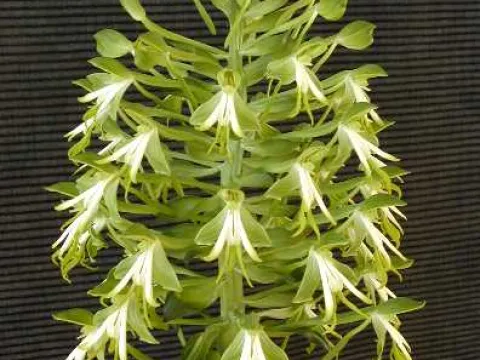
Bonatea
Bonatea
Bonatea is a genus of perennial herbaceous plants belonging to the Orchidaceae family. While not a conventional field crop, it is highly valued in specialized greenhouse production as a unique ornamental species that requires specific environmental conditions to thrive.
What the section contains


Bonatea
The origin of this genus is primarily the African continent, where it inhabits diverse ecological zones ranging from open woodlands to rocky slopes. This evolutionary background has equipped the plant with tuberous structures, enabling it to survive distinct seasonal changes in moisture availability.
Botanically, Bonatea is characterized by its distinct floral morphology, often featuring complex, fringed petals. The vegetative growth relies on healthy foliage that requires a balanced supply of macro- and micronutrients during the active growing phase to support subsequent blooming.
The cultivation requirements are strict regarding substrate composition. The growing medium must be highly porous, typically composed of bark, perlite, and organic components that ensure excellent aeration to prevent root hypoxia, which is lethal to this genus.
Temperature and light management are paramount for successful development. Bonatea prefers warm climates with filtered sunlight. Intense direct light must be avoided to prevent foliar scorching, while inadequate light levels often result in sterile plants that fail to produce floral spikes.
The primary threats to Bonatea crops involve pathogenic fungi such as Pythium and Rhizoctonia, which are encouraged by waterlogged conditions. Maintaining an optimal drying cycle between watering intervals is essential to protect the root system from decay.
Pest management is focused on controlling sap-sucking insects. Spider mites are a common nuisance in low-humidity greenhouse environments, leading to leaf discoloration and physiological stress that weakens the plant's immune response to other diseases.
Mealybugs represent another significant challenge, as they frequently cluster in hidden areas such as leaf axils and crown tissues. Their feeding not only damages plant cells but also leaves behind honeydew, which serves as a substrate for sooty mold development.
Integrated pest management (IPM) practices are highly recommended for Bonatea. This includes the use of predatory insects for biological control alongside precise chemical interventions only when threshold levels of pest density are exceeded.
Sanitation is the cornerstone of disease prevention. All tools must be sterilized regularly, and any plant displaying signs of necrosis should be immediately isolated or destroyed to prevent the spread of systemic bacterial infections within the nursery population.