
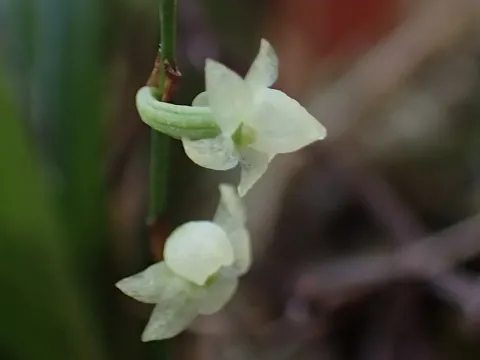
Angraecum
Angraecum
Angraecum is a genus of epiphytic and lithophytic orchids belonging to the Orchidaceae family. In the wild, these plants are primarily found in the tropical forests of Madagascar and islands in the Indian Ocean.
What the section contains
 Angraecum distichum
Angraecum distichum
Angraecum distichum
 Angraecum eburneum
Angraecum eburneum
Angraecum eburneum
 Angraecum germinyanum
Angraecum germinyanum
Angraecum germinyanum
 Angraecum hybrids
Angraecum hybrids
Angraecum hybrids
 Angraecum infundibulare
Angraecum infundibulare
Angraecum infundibulare
 Angraecum longicalcar
Angraecum longicalcar
Angraecum longicalcar
 Angraecum magdalenae
Angraecum magdalenae
Angraecum magdalenae
 Angraecum scottianum
Angraecum scottianum
Angraecum scottianum
 Angraecum striatum
Angraecum striatum
Angraecum striatum
 Angraecum subulatum
Angraecum subulatum
Angraecum subulatum
 Angraecum veitchii
Angraecum veitchii
Angraecum veitchii
 Angraecum vesiculiferum
Angraecum vesiculiferum
Angraecum vesiculiferum
 Angraecum viguieri
Angraecum viguieri
Angraecum viguieri
 Darwin's orchid
Angraecum sesquipedale
Darwin's orchid
Angraecum sesquipedale
Angraecum
For successful cultivation of this crop, a stable temperature range between 20 and 26 degrees Celsius is required. Sharp temperature fluctuations and drafts have a negative impact on root system development and flowering.
The most important requirement is to ensure high air humidity, which should be maintained at 70–80%. In home or greenhouse conditions, the use of air humidifiers or trays with moist expanded clay is highly recommended.
The growing medium for Angraecum is not soil in the traditional sense, as the crop requires a specific substrate. An optimal choice is a mixture of pine bark, charcoal, sphagnum moss, and polystyrene foam pieces to provide excellent drainage.
The plant is extremely sensitive to lighting conditions. Active growth requires bright but diffused light, as direct sunlight can cause burns on the thick, leathery leaves of the orchid.
The main pests that infest the crop when maintenance conditions are violated are spider mites and scale insects. They feed on cell sap, weakening the plant's immunity and slowing down its vegetation.
Excessive watering and water stagnation in the substrate inevitably lead to the development of root and stem rot. These fungal diseases can destroy the crop in a short time if the substrate is not replaced promptly.
To combat pests, systemic insecticides and acaricides are used, treating the affected areas and neighboring plants. It is important to follow the dosage specified in the instructions to avoid damaging the sensitive roots.
Prevention of rot consists of ensuring constant air circulation around the pot. It is also recommended to use fungicides during transplanting to disinfect the root system.
Timely diagnosis of the condition of leaves and roots helps prevent the spread of diseases. Upon detection of the first spots, it is necessary to immediately isolate the sick plant.