
Angraecum infundibulare
Angraecum infundibulare
Description
Growing requirements
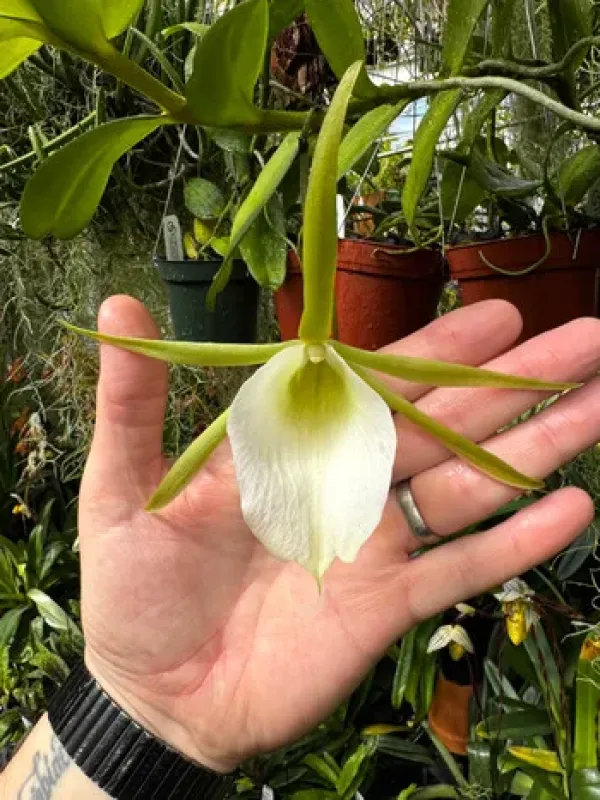
Angraecum infundibulare is a fascinating epiphytic orchid belonging to the Orchidaceae family. It is native to the tropical rainforests of Central Africa, where it thrives in high-humidity environments. This species features a distinct growth pattern with a tall, slender stem and leathery, lance-shaped leaves typical of monopodial orchids.
To successfully cultivate this crop, it is necessary to maintain a constant tropical temperature range, ideally between 20°C and 28°C. Stability is key, as significant fluctuations can cause severe stress to the plant. The lighting should be bright but filtered, mimicking the dappled sunlight found under the canopy of trees in its natural habitat.
The substrate requirement for this plant is specific: it requires an airy, fast-draining medium. A mix of coarse pine bark, charcoal, and perlite is often used to ensure that the root system has access to sufficient oxygen. Because it is an epiphyte, the roots must be allowed to dry out slightly between waterings to prevent oxygen starvation.
Agronomic management involves maintaining humidity levels between 70% and 80%. Regular misting or the use of humidifiers is essential in domestic or greenhouse environments. Fertilizer should be applied sparingly, using a balanced orchid-specific formula at half-strength during the growing season to promote healthy leaf development and flowering.
The primary economic use of this species is in the horticultural trade, specifically for collectors and enthusiasts of rare orchids. Its large, aromatic, funnel-shaped flowers make it a highly desirable specimen for specialized botanical collections and high-end greenhouse displays.
Main diseases and pests
Common health issues include root rot and stem rot, often resulting from improper watering practices or inadequate airflow. Major insect pests include spider mites, scale insects, and mealybugs, which can be managed through regular physical inspections and the application of appropriate horticultural soaps or oils.