
Angraecum vesiculiferum
Angraecum vesiculiferum
Description
Growing requirements
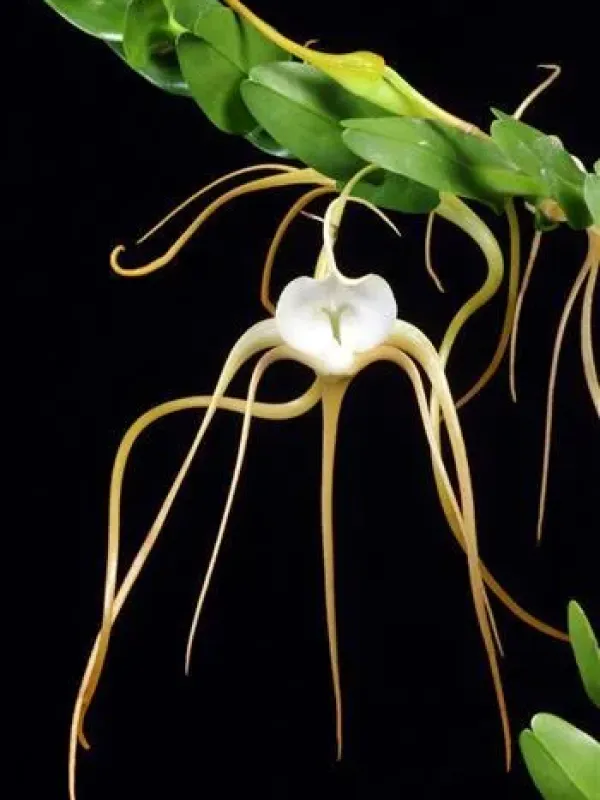
Angraecum vesiculiferum is a rare epiphytic orchid species belonging to the family Orchidaceae. Native to the tropical forests of Madagascar, this plant thrives in environments with consistently high humidity and warm temperatures throughout the year.
To cultivate this species successfully, one must provide bright, indirect sunlight. Exposure to harsh direct sun will quickly cause leaf damage, so filtered light or specialized lighting setups are recommended for indoor collections.
The ideal temperature range is between +18°C and +25°C. Stability is key for this species, as sudden drops in temperature can cause stress and halt the growth cycle of the orchid.
A well-aerated substrate is crucial, as the roots require significant oxygenation. A mix of pine bark, charcoal, and sphagnum moss is commonly used to maintain the necessary balance between moisture retention and drainage.
Watering should be done using soft, filtered water, ensuring the medium stays moist but never soggy. Occasional misting or the use of humidifiers helps maintain the required humidity levels of 60-80%.
Main diseases and pests
Root rot, caused by poor drainage and stagnant moisture, is the primary threat to Angraecum vesiculiferum. If the substrate breaks down and loses aeration, the roots quickly succumb to fungal infections.
Spider mites are common pests that thrive in the dry air of home environments. They damage the leaves by piercing the tissue to feed on cell sap, leading to stunted growth and yellowing of the foliage.
Scale insects and mealybugs can also infest this orchid, particularly hiding in leaf axils where they are difficult to reach. Manual removal or application of horticultural soap is often necessary to control these populations.
Fungal spot diseases may occur if water lingers on the leaves for extended periods. Proper air circulation is the most effective preventative measure to keep the foliage dry and healthy.
Using improper fertilizers or excessive nitrogen concentrations can lead to weak, succulent-like growth that is more susceptible to disease. A balanced, diluted orchid fertilizer is recommended for healthy long-term development.