
Angraecum longicalcar
Angraecum longicalcar
Description
Growing requirements
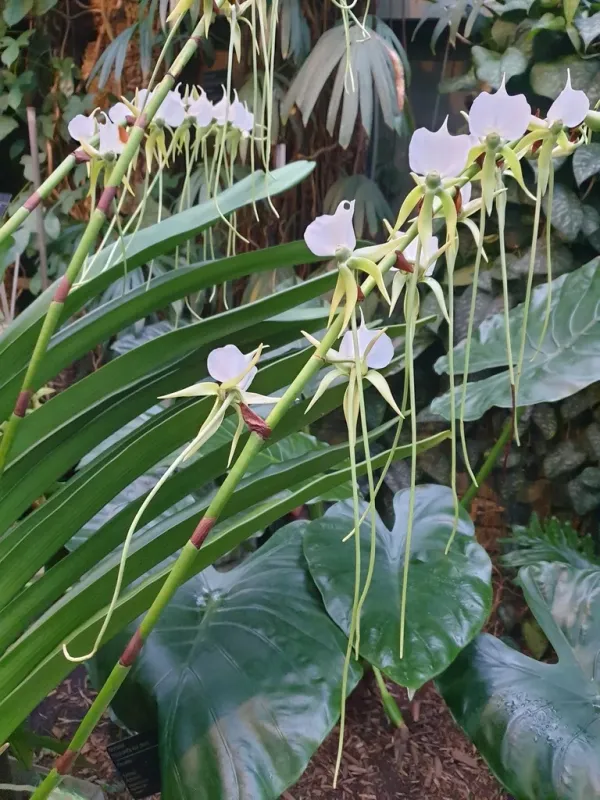
Angraecum longicalcar is an epiphytic orchid belonging to the Orchidaceae family. Endemic to the forests of Madagascar, this species is highly valued in horticulture for its distinct, long-spurred flowers and sculptural growth habit.
The cultural requirements for this plant focus on replicating the high-altitude tropical climate. Maintaining temperatures between 18 and 25 degrees Celsius is essential for steady vegetative growth and the development of inflorescences.
This orchid requires an open, airy substrate designed for epiphytes, typically consisting of large-grade pine bark, charcoal, and perlite. Proper drainage is vital, as the roots must be able to dry out partially between waterings.
Humidity is a critical factor in the plant's health, ideally kept at 70 to 80 percent. In controlled greenhouse environments, constant airflow is required to prevent stagnant moisture, which can lead to rapid physiological decline.
Light levels should be moderate to bright, but strictly indirect to protect the foliage from scorching. During the growing season, a regular fertilization schedule using a balanced, diluted orchid fertilizer is necessary to ensure optimal nutrient uptake.
Main diseases and pests
Common horticultural pests affecting this species include mealybugs and scale insects. These pests settle on the undersides of leaves and in tight growth areas, requiring manual removal or the application of insecticidal soaps.
Root rot, often caused by poor drainage or overwatering, is the most common fatal condition for Angraecum species. The presence of dark, mushy roots indicates a need for immediate intervention and a change in watering frequency.
Fungal pathogens such as Botrytis may appear on flowers during periods of high humidity and poor circulation. Maintaining high air movement is the most effective preventative measure against these infections.
Bacterial soft rot can occur if water persists in the center of the plant or in leaf axils. Care should be taken to water at the base of the plant only, ensuring the crown remains dry at all times.
Nutrient deficiency or pH imbalance in the substrate can lead to stunted growth. Regular flushing of the pot with clean water prevents salt accumulation, which can burn sensitive orchid roots over time.