
Darwin's orchid
Angraecum sesquipedale
Description
Growing requirements
Angraecum sesquipedale, commonly known as Darwin's orchid, is a spectacular epiphytic plant native to the tropical forests of Madagascar. To thrive, it requires a stable environment with daytime temperatures between 22°C and 26°C and slightly cooler nights.
High relative humidity, ideally between 70% and 80%, is crucial for the health of this species. Proper air circulation must be maintained to prevent fungal growth, especially in the leaf axils where water might otherwise pool and stagnate.
The substrate must be highly porous to ensure rapid drainage and airflow to the roots. A mixture of pine bark, charcoal, and sphagnum moss provides the necessary conditions for this epiphyte to anchor itself and absorb nutrients efficiently.
Lighting should be bright but filtered, mimicking the dappled light of the forest canopy. Intense, direct sunlight can damage the leaves, causing bleaching or necrotic spots, while insufficient light will prevent the plant from blooming.
Watering should be consistent but cautious. Use soft, room-temperature water and allow the substrate to dry slightly between waterings to avoid root rot. Fertilizer should be applied during the growing season using a balanced, orchid-specific formula.
Main diseases and pests
The most common pests affecting Angraecum sesquipedale are scale insects and mealybugs. These pests hide in leaf crevices, and regular inspection is necessary to manage outbreaks before they spread across the collection.
Bacterial and fungal rot are the most frequent health threats, often caused by overwatering or poor air circulation. If rot appears, the affected tissue must be excised immediately, and the area treated with a suitable fungicide.
Poor water quality, specifically water high in dissolved minerals, can lead to salt accumulation in the substrate. This results in root damage and tip burn on the leaves, emphasizing the need for soft or distilled water.
Spider mites may pose a problem in environments with low humidity. Increasing ambient moisture or using horticultural soaps can effectively deter these pests without harming the delicate orchid foliage.
While rare, viral infections can be devastating. Since there is no cure, strict hygiene protocols, such as disinfecting tools between plants, are the primary method to prevent the spread of diseases within an orchid collection.
Harvesting
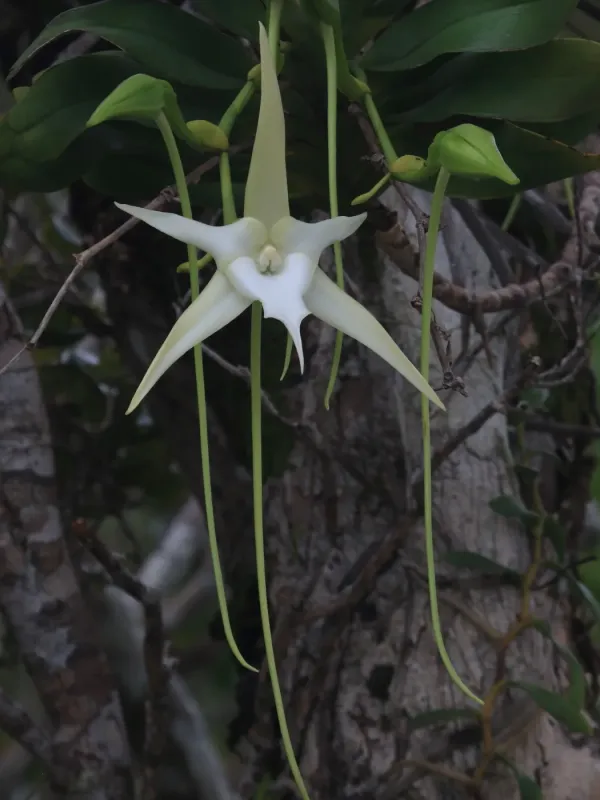
Harvesting for Angraecum sesquipedale in a commercial or botanical context usually involves the careful selection of specimens for display or exhibition. The flowers, famous for their extremely long spurs, are the primary focus of interest.
When cutting a flower spike for display, use a sterile, sharp knife to prevent the introduction of pathogens. Proper handling of the spike ensures it retains its waxy appearance and intoxicating fragrance for as long as possible in a vase.
Propagation is primarily handled through tissue culture or meristem cloning in professional laboratories. Attempting to grow this orchid from seed is extremely difficult as it requires specific mycorrhizal fungi for germination.
After the flowering season, the spent inflorescence should be carefully removed to prevent the plant from wasting energy on seed production. This allows the orchid to redirect its resources toward developing new leaves and root systems.
Regular maintenance during the non-flowering period ensures the plant remains vigorous. Monitoring growth and potential potting needs is essential to sustain the plant's health over many years of life.