
Angraecum hybrids
Angraecum hybrids
Description
Growing requirements
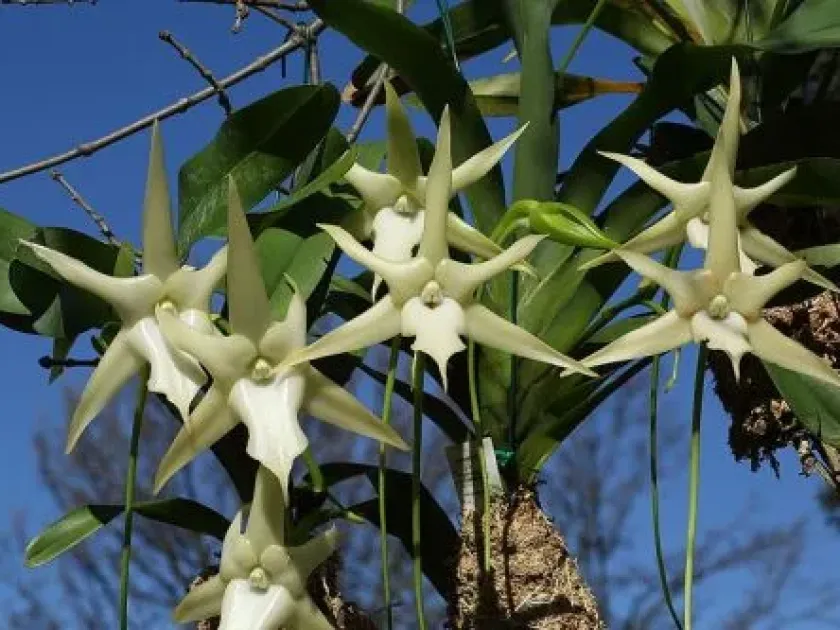
Angraecum hybrids belong to the family Orchidaceae and are highly valued for their sophisticated, star-shaped flowers and intense nocturnal fragrance. These hybrids are bred from species native to Madagascar and surrounding islands, retaining an epiphytic growth habit.
Optimal growth requires high humidity levels ranging from 60% to 80% and consistent air movement. Proper ventilation is essential to mimic the natural tropical environment and prevent moisture stagnation in the leaf axils.
Regarding light, these orchids thrive in bright, filtered light. Direct sunlight exposure should be strictly avoided to prevent thermal damage to the leaves, as the plant is adapted to the semi-shaded canopy of its natural habitat.
The substrate must provide excellent drainage, typically consisting of chunky fir bark, perlite, and charcoal. Because they are epiphytes, their roots require oxygen exposure; therefore, pot-bound conditions or dense, water-retaining soils are detrimental.
In commercial ornamental production, these orchids are prized for their unique aesthetic appeal. Breeding efforts focus on creating plants that flower more reliably in greenhouse settings, making them accessible for high-end floral markets and collectors.
Main diseases and pests
The primary threats to Angraecum hybrids include bacterial and fungal pathogens, which frequently manifest as root or crown rot. These issues are almost exclusively linked to overwatering or lack of sufficient air circulation around the root zone.
Scale insects represent a significant pest concern. These hard-shelled organisms attach to the leaves and stem, feeding on plant sap. Early detection is crucial, as their waxy covering makes them resistant to many contact insecticides.
Spider mites can become a nuisance during the drier months when humidity drops. They cause stippling on the leaves, which can eventually lead to tissue death if not treated with appropriate miticides or increased moisture.
Mealybugs are another common pest that tends to congregate in the tight crevices between leaves. Manual removal combined with systemic horticultural oils is the recommended method for control in sensitive orchid collections.
To ensure long-term plant health, producers should implement a strict sanitary protocol. This includes disinfecting all tools used for pruning or repotting to prevent the transmission of viruses that can irreversibly damage the orchid's genetic potential.