
Anatolian orchid
Orchis anatolica
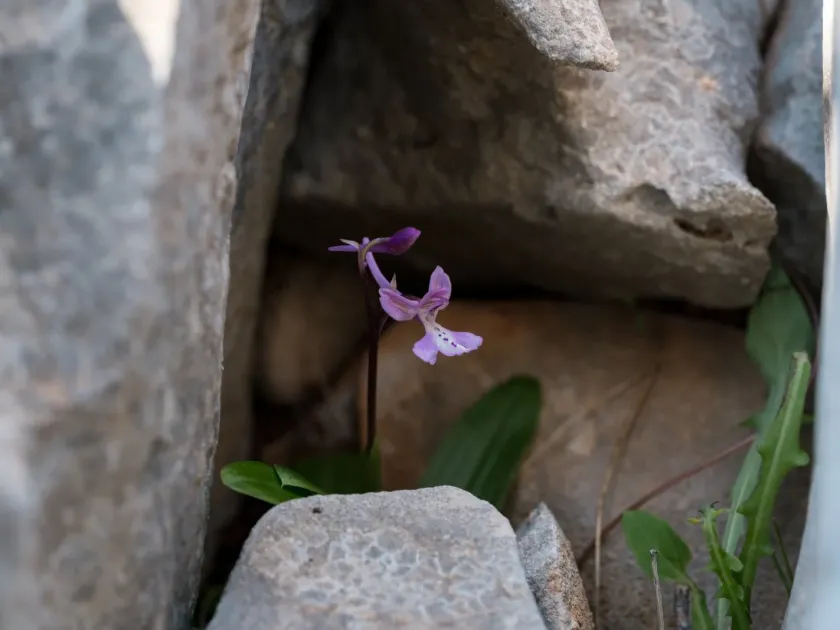
Description
Sowing dates
The Anatolian orchid is a perennial herbaceous plant belonging to the Orchidaceae family. In its natural habitat, reproduction occurs primarily through seeds, which are minute and lack endosperm, requiring a symbiotic relationship with mycorrhizal fungi for successful germination.
In cultivation, sexual reproduction is rarely used due to the complexity of recreating these symbiotic conditions. Instead, commercial propagation is achieved through in vitro laboratory methods or by the careful division of daughter tubers during the dormant phase of the plant cycle.
Sowing or planting should be scheduled during the period when the plant is inactive, specifically after the foliage has died back. This timing ensures that the energy resources are concentrated within the tubers, increasing the success rate of propagation and plant survival.
When introducing the plant to a new site, incorporating soil from a healthy, existing population is recommended to provide necessary mycorrhizal fungi. Without this fungal partner, the orchid will fail to thrive, showing poor development and susceptibility to rot.
For seeds grown in controlled environments, maintaining a consistent temperature between 20-22 degrees Celsius is essential during the early stages. The substrate must remain sterile yet hospitable, and humidity levels must be strictly monitored to prevent fungal overgrowth.
Growing requirements
The Anatolian orchid prefers open or semi-shaded environments with excellent soil aeration. In the wild, it is typically found on rocky slopes and woodland edges, indicating a need for well-drained substrates that prevent the accumulation of stagnant water.
The plant performs best in neutral to slightly alkaline soils. High calcium content is beneficial for tuber development, while acidic conditions inhibit growth and make the root system highly susceptible to various fungal infections and decay.
Water requirements are moderate. The root system needs stable, consistent moisture to thrive, yet the plant is intolerant to waterlogged soil. Drip irrigation is often the most effective method to ensure the rhizosphere remains hydrated without inducing root rot.
The ideal temperature for vegetative growth ranges from 15 to 25 degrees Celsius. While the species is relatively hardy, providing mulch during winter is advisable in regions with fluctuating temperatures to protect the dormant tubers from frost heave and damage.
Light management is crucial; the plant requires intense sunlight during the spring to stimulate blooming, followed by light shading during the heat of the summer to prevent overheating, which can lead to premature senescence of the plant's organs.
Yield
The economic value of the Anatolian orchid lies in its tubers, which are harvested for the production of salep, a nutrient-dense powder high in glucomannan. The plants typically reach harvestable maturity within three to four years of initial establishment.
Productivity is generally considered modest, requiring systematic cultivation practices to ensure profitable yields. With optimal planting density and soil management, cultivators can achieve consistent results, though the long growth cycle necessitates a stable, multi-year plan.
Tuber productivity is directly linked to the accumulation of starches and mucilage during the growing season. Applying potassium and phosphorus-based fertilizers can enhance the structural integrity and nutritional density of the tubers, leading to higher quality yields.
The harvesting phase should be timed to maximize the glucomannan content, which peaks towards the end of the flowering period. At this stage, the plant has effectively stored most of its energy reserves in the new daughter tubers.
Weed management is vital to maximize yield, as aggressive competition for light and nutrients can severely stunt the orchid's growth. Maintaining clear planting rows improves airflow and reduces the risk of pest infestations in dense cultivation plots.
Main diseases and pests
Root and grey rot are the most significant threats to the Anatolian orchid, often triggered by poor drainage or excessive humidity. These fungal diseases spread rapidly and can decimate a plantation if not managed through proper sanitation and soil aeration.
Pests such as nematodes and wireworms are particularly dangerous as they feed on the underground tubers. Their feeding damage creates wounds that allow pathogenic bacteria and fungi to infiltrate the plant, often leading to total loss of the root system.
Above-ground pests, including aphids and spider mites, can weaken the plant during hot and dry spells. While they rarely kill the plant outright, the loss of leaf surface area reduces photosynthetic efficiency, resulting in smaller, underdeveloped tubers.
An integrated pest management approach is recommended, utilizing a rotation of different biological controls to prevent resistance. Proactive measures, such as sterilizing equipment and keeping planting areas free of debris, significantly lower the risk of infection.
In high-density plantings, insufficient air circulation can lead to powdery mildew outbreaks. Monitoring plant density and ensuring rows are spaced adequately are standard practices to maintain a healthy environment that discourages the spread of foliar pathogens.
Harvesting
Harvesting should occur only after the above-ground foliage has completely withered. This is the physiological signal that the plant has ceased active growth and that the tubers have finished accumulating the reserves required for the next season.
Tubers must be extracted carefully using manual tools like garden forks to avoid nicks or breaks. Any mechanical injury to the tuber skin makes the harvest vulnerable to rot during the drying and storage process, significantly lowering the market value.
Once harvested, the tubers must be thoroughly cleaned of soil and briefly blanched in boiling water. This blanching step is essential to deactivate enzymes that cause darkening, ensuring the final product maintains its desirable light color and quality.
Drying must be conducted at moderate temperatures, ideally between 40-50 degrees Celsius, in a well-ventilated environment. Excessive heat during drying can degrade the complex polysaccharides (glucomannan), reducing the functional properties of the salep.
Storage should be in cool, dark, and dry conditions. Using breathable packaging, such as paper sacks, allows for continued moisture regulation, preventing the tubers from reabsorbing humidity and protecting them from mold or insect infestation during storage.