
Angraecum eburneum
Angraecum eburneum
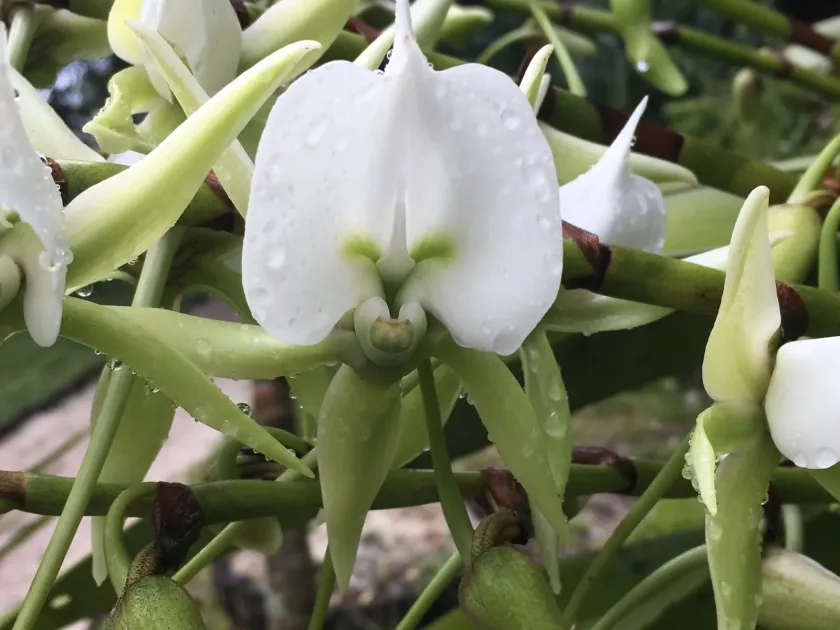
Description
Growing requirements
Angraecum eburneum is a prominent epiphytic orchid species belonging to the Orchidaceae family. It is native to the tropical regions of Madagascar, the Comoros, and the Seychelles, where it grows as a robust monopodial plant on tree branches.
This orchid requires high humidity levels, ideally maintained between 60% and 80%. A stable climate is crucial for healthy development, with day temperatures ranging from 22°C to 27°C and slightly cooler nights to stimulate the orchid's metabolism.
Light intensity is a critical factor for successful cultivation. While the plant prefers bright, indirect sunlight, it can tolerate slightly higher light levels compared to other orchids, provided it is protected from intense midday sun that could scorch its thick leaves.
The potting medium must be exceptionally well-draining. Growers typically use a coarse mixture of orchid bark, charcoal, and perlite. Because this species is an epiphyte, its root system requires significant air circulation to prevent fungal pathogens.
Watering should be rhythmic, allowing the substrate to dry slightly between sessions. During the active growing season, frequent light misting and consistent watering are necessary, but drainage must always be ensured to keep the roots oxygenated.
Main diseases and pests
Common pests affecting Angraecum eburneum include spider mites and scale insects. These pests often congregate in the leaf axils, making regular inspections essential for early detection and manual removal or treatment.
Fungal rots are the most dangerous threats to the plant's structural integrity. These issues are almost exclusively caused by excessive moisture trapped around the crown or root ball due to inadequate ventilation or poorly draining growth media.