
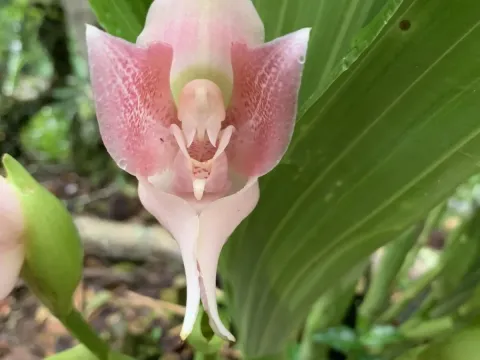
Anguloa
Anguloa
Anguloa is a genus of sympodial orchids within the Orchidaceae family, native to the mountainous regions of South America. These orchids are highly prized for their unique, tulip-shaped flowers, which emerge from the base of large, fleshy pseudobulbs.
What the section contains

Anguloa
These plants thrive in cool to intermediate temperatures. It is essential to maintain a significant drop in temperature between day and night, as this environmental cycle is crucial for triggering the blooming process of the tulip orchid.
The substrate must be highly drainage-oriented to mimic the epiphytic environment. A mix containing premium fir bark, perlite, and a small amount of charcoal is ideal for preventing compaction and ensuring roots have access to oxygen.
Lighting should be bright but filtered. Because Anguloa has broad, plicate leaves, they are susceptible to heat stress and sunburn. A shaded greenhouse or an east-facing window is usually the best location to ensure optimal health and photosynthesis.
Watering requires a balanced approach. During the peak growth season, the potting medium should remain consistently damp. However, once the pseudobulbs reach maturity, the plant requires a dry rest period to prepare for the next flowering cycle.
Spider mites are the most common pest, especially in indoor environments with low humidity. They typically gather on the underside of the broad leaves, causing yellowing and weakening the plant's structural integrity if left untreated.
Root rot is a major threat linked to overwatering and inadequate drainage. Once the roots are compromised by fungal pathogens, it becomes very difficult for the pseudobulbs to recover, often leading to the eventual decline of the plant.
Scale insects can pose a persistent challenge by attaching themselves to the pseudobulbs. These pests are best managed by manual removal with rubbing alcohol and, if necessary, the application of horticultural oils or systemic pesticides.
Fungal leaf spots can occur when the air is stagnant and humidity is too high. Improving airflow with a small fan can significantly reduce the risk of leaf infections and help keep the foliage clean and healthy throughout the year.
If the orchid shows signs of bacterial rot, immediate pruning of the infected area is required, followed by the application of a fungicide. Ensuring that tools are sanitized before use is a critical step in preventing the spread of disease.