
Angraecum subulatum
Angraecum subulatum
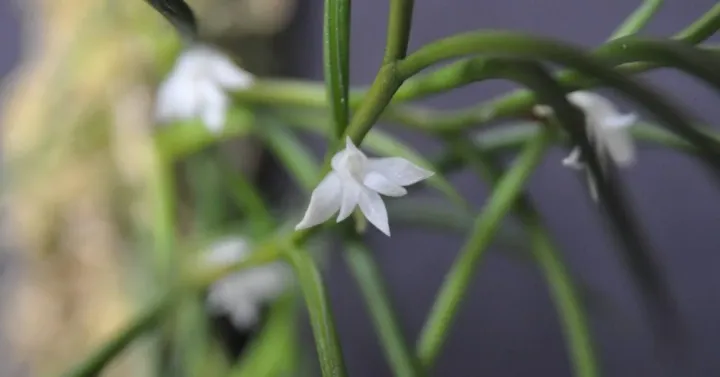
Description
Growing requirements
Angraecum subulatum is a member of the Orchidaceae family, native to the tropical forests of West and Central Africa. This species is an epiphyte, meaning it grows on the branches of trees, relying on high humidity and rainfall for its water and nutrient requirements.
Botanically, it features a monopodial growth habit with needle-like, subulate leaves arranged along a slender stem. The roots are robust and aerial, adapted to absorb moisture directly from the humid air and mineral deposits found on tree bark.
To cultivate this plant successfully, one must replicate its natural environment by providing bright, indirect light. Direct sunlight can easily damage the delicate leaf structure, while insufficient light will hinder its growth and vitality.
Temperature management is critical for Angraecum subulatum. It thrives in warm conditions, ideally staying between 20 and 25 degrees Celsius throughout the day. It is essential to maintain consistent temperatures and avoid exposure to cold drafts.
The choice of growing medium is vital; it must provide excellent drainage and aeration. Mounting the plant on wood slabs or using very coarse bark is recommended, as potting in standard soil would suffocate the root system and lead to failure.
Main diseases and pests
Fungal pathogens and bacterial infections represent the most significant threats to Angraecum subulatum. These diseases usually emerge when stagnant water is left in the leaf axils or when the root system remains waterlogged for too long.
Spider mites and mealybugs are the most common pests affecting this orchid. Their ability to hide within the tight spaces of the subulate leaves makes them difficult to eradicate without consistent monitoring and timely application of appropriate pesticides.
Poor ventilation is another major threat that often leads to the development of mold and mildews. Ensuring a steady flow of fresh air is necessary to prevent the buildup of moisture on the foliage, which is a precursor to many infections.
Over-fertilization can cause root burn and damage the plant's ability to absorb water. It is important to use orchid-specific fertilizers at a fraction of the recommended strength to ensure safe nutrient uptake during the growing season.
Lastly, the lack of sufficient atmospheric humidity will cause the plant to dehydrate, leading to yellowing and premature leaf drop. Maintaining a humidity level of 70-80 percent is essential for the health of this tropical species.