
Angraecum veitchii
Angraecum veitchii
Description
Growing requirements
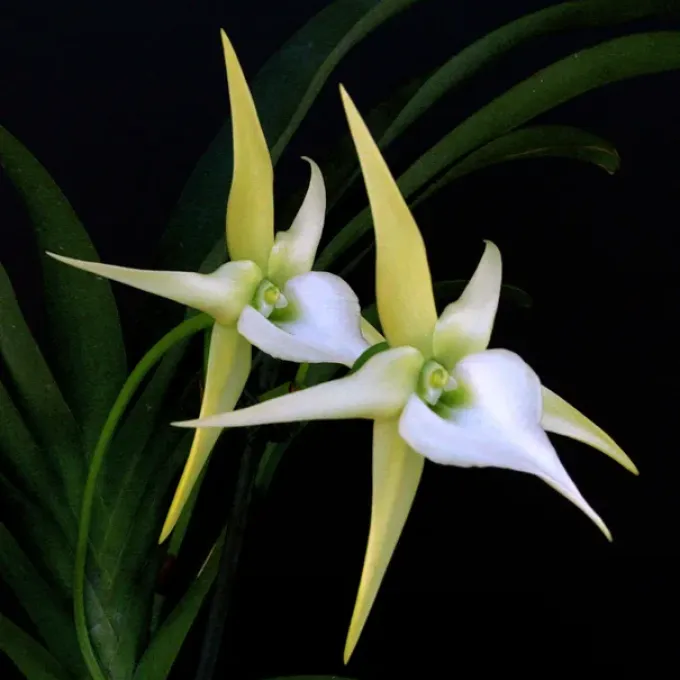
Angraecum veitchii is a primary hybrid derived from two iconic orchid species, Angraecum sesquipedale and Angraecum eburneum. As a member of the Orchidaceae family, it is highly prized for its large, waxy, star-shaped flowers and a delightful nocturnal fragrance.
The plant requires bright but indirect light to thrive. Excessive exposure to direct sunlight during peak hours can damage the leaves, so placing it near an east or west-facing window is recommended for optimal photosynthetic activity.
For substrate, a coarse mix specifically designed for epiphytic orchids should be used. This typically includes high-quality bark, charcoal, and perlite, which ensures proper aeration of the root system and prevents moisture stagnation.
Temperature management is critical for blooming. Angraecum veitchii prefers a warm environment during the day, typically between 22–26 °C, with a necessary cooling period at night to trigger the formation of flower spikes.
Humidity levels should be maintained consistently high, around 60–70%. Regular misting or the use of an ultrasonic humidifier is recommended, especially in heated indoor spaces during the winter season.
Main diseases and pests
The most common threat to Angraecum veitchii is fungal root rot. This condition is primarily caused by poor drainage or keeping the roots consistently wet without allowing for a dry-down phase.
Pests such as scale insects and mealybugs can pose a significant challenge. These insects hide in the axils of the leaves, where they feed on sap, eventually weakening the entire plant structure.
Bacterial soft rot can occur if water remains trapped in the crown or leaf axils after watering. Ensuring the plant is kept in a well-ventilated area helps prevent this issue.
Regular monitoring of the foliage and root zone is essential for early detection of issues. Using a soft cloth to clean the leaves also helps keep the plant free from dust and pests.
In cases of severe infestation, using horticultural oils or systemic insecticides may be necessary to protect the plant while ensuring the long-term health of the root system.