
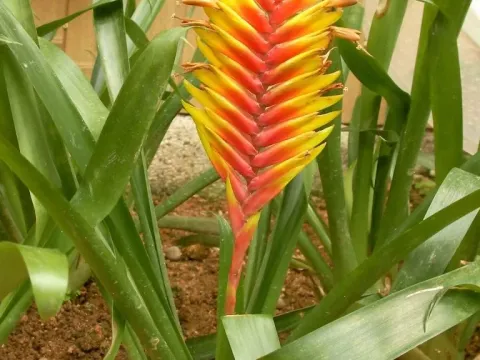
Vriesea
Vriesea
Vriesea is a genus of tropical epiphytic plants belonging to the Bromeliaceae family. Native to the lush rainforests of Central and South America, these plants are uniquely adapted to grow on tree branches, deriving moisture and nutrients from the air and organic debris caught in their rosettes.
What the section contains
 Vriesea bituminosa
Vriesea bituminosa
Vriesea bituminosa
 Vriesea carinata
Vriesea carinata
Vriesea carinata
 Vriesea delicatula
Vriesea delicatula
Vriesea delicatula
 Vriesea dubia
Vriesea dubia
Vriesea dubia
 Vriesea duvaliana
Vriesea duvaliana
Vriesea duvaliana
 Vriesea ensiformis
Vriesea ensiformis
Vriesea ensiformis
 Vriesea fenestralis
Vriesea fenestralis
Vriesea fenestralis
 Vriesea gigantea
Vriesea gigantea
Vriesea gigantea
 Vriesea heterostachys
Vriesea heterostachys
Vriesea heterostachys
 Vriesea hybrids
Vriesea hybrids
Vriesea hybrids
 Vriesea saundersii
Vriesea saundersii
Vriesea saundersii
 Vriesea simplex
Vriesea simplex
Vriesea simplex
 Vriesea zamorensis
Vriesea zamorensis
Vriesea zamorensis
Vriesea
The botanical structure of Vriesea consists of a dense, tank-like rosette of succulent, smooth-edged leaves. The centerpiece of the plant is its vivid, sword-shaped or branched inflorescence, which can remain ornamental for several months, making it highly valued in professional floriculture.
Optimal growth requires a stable, bright environment with indirect sunlight. Temperatures should be maintained between 22°C and 26°C during the day. During the winter, the plant enters a period of slower growth, but temperatures must not fall below 16°C to prevent physiological shock.
The cultivation medium must be highly porous and well-draining, similar to those used for orchids. A mixture of pine bark, perlite, and sphagnum moss is recommended to provide sufficient aeration to the roots and prevent waterlogging, which is detrimental to epiphytic health.
Water management is the most critical aspect of Vriesea agronomy. Water must be poured into the central tank formed by the rosette, which should be kept filled. Using soft, dechlorinated water at ambient temperature is essential to prevent mineral buildup and subsequent tissue damage within the rosette.
Scale insects are a primary threat to Vriesea, often hiding in the tight crevices of the leaves. These pests sap nutrients from the plant, leading to stunted growth and the potential transmission of secondary viral or bacterial infections through their feeding sites.
Mealybugs are another common challenge, appearing as white, cotton-like masses at the base of the plant. They thrive in poorly ventilated environments and can quickly infest a collection if not treated with systemic insecticides or horticultural oils.
Fungal rots, particularly at the base of the rosette, are frequently caused by stagnant water or inadequate airflow. If the water in the tank is not replaced regularly, it can become a breeding ground for pathogens that cause rapid necrotic decay of the leaf tissues.
Spider mites represent a significant risk during dry seasons or in climate-controlled environments with low humidity. They typically colonize the undersides of leaves, resulting in yellow stippling and a loss of aesthetic quality for commercial production.
Effective management involves integrated pest control, ensuring proper drainage, and maintaining relative humidity levels above 50%. Regular scouting is necessary to identify infestations early, allowing for targeted treatments that preserve the decorative integrity of the flowering spike.