
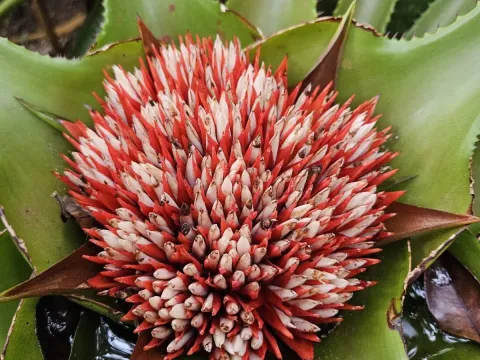
Wittrockia
Wittrockia
Wittrockia is a genus of perennial plants within the Bromeliaceae family. These plants are native to the tropical regions of Eastern Brazil, where they typically grow as epiphytes on trees or occasionally as terrestrial plants in forest soils.
What the section contains


Wittrockia
The botanical structure of Wittrockia features a rosette of stiff, often spiny-edged leaves. These leaves are arranged in a way that creates a central tank or urn, which is specifically evolved to collect rainwater and nutrients in its native environment.
For cultivation purposes, Wittrockia requires bright, indirect light to thrive. Exposure to harsh, direct sunlight will damage the leaf texture and color. A warm environment with consistent temperatures between 20 and 25 degrees Celsius is generally preferred for optimal growth.
The potting medium must be extremely well-draining, mimicking the porous bark or leaf litter of the rainforest floor. A mixture of pine bark, perlite, peat moss, and charcoal is recommended to ensure that the roots receive sufficient aeration while retaining necessary moisture.
Agricultural management of this crop involves keeping the central rosette filled with clean, soft water. Fertilization should be done sparingly, using balanced, water-soluble fertilizers applied to the potting mix or diluted significantly for foliar feeding during the growing season.
The primary threats to Wittrockia health are fungal rot and bacterial infections caused by stagnant water in the leaf axils combined with poor air circulation. Overwatering or low temperatures can exacerbate these conditions, leading to rapid decay of the plant center.
Scale insects and mealybugs are the most persistent pests affecting this genus. Scale insects attach themselves to the undersides of leaves, while mealybugs tend to congregate in the tight spaces between leaves, making them difficult to detect and eradicate.
Spider mites can also become a significant issue in low-humidity environments. Their presence is usually indicated by fine webbing and yellow stippling on the foliage, which can quickly diminish the plant's aesthetic and structural integrity.
Management of pests includes mechanical removal with cotton swabs dipped in alcohol or the application of horticultural oils. In more severe infestations, systemic insecticides labeled for use on indoor foliage plants are necessary to gain control.
Maintaining a high level of ambient humidity and ensuring adequate space between individual specimens are the best preventive measures against disease. Regular monitoring and prompt action at the first sign of infestation ensure the longevity of the collection.