
Vriesea hybrids
Vriesea hybrids
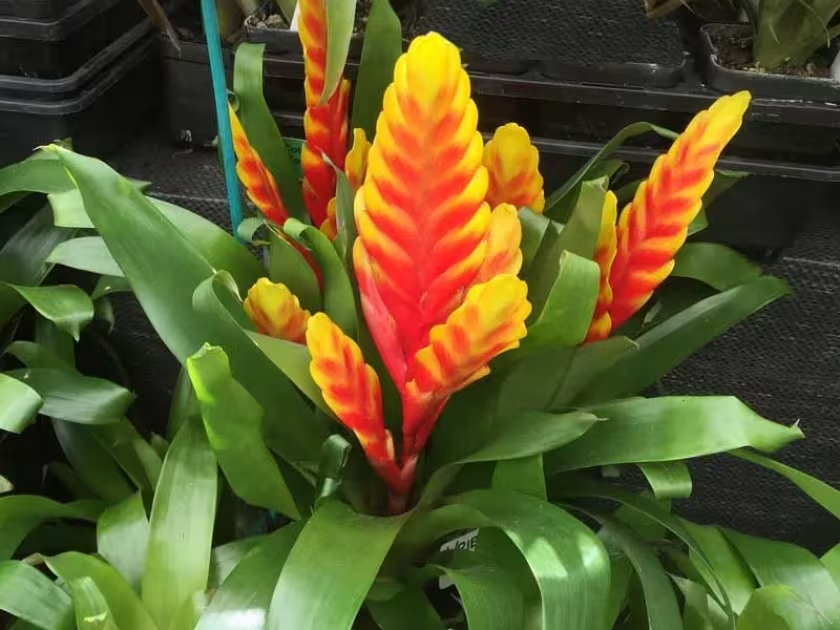
Description
Growing requirements
Vriesea hybrids belong to the Bromeliaceae family and are widely cultivated as ornamental plants. Originally from the tropical forests of Central and South America, these plants have adapted to diverse environments, typically growing as epiphytes on trees.
The ideal temperature for these hybrids ranges from 20°C to 25°C. They thrive in environments with high relative humidity, often requiring supplemental misting or pebble trays to maintain moisture levels above 60%.
The substrate must be highly porous and well-draining to prevent root asphyxiation. A mix consisting of orchid bark, peat moss, perlite, and coarse sand provides the necessary aeration for these plants to remain healthy.
Lighting requirements involve bright but indirect sunlight. Intense direct light can bleach the foliage and damage the delicate rosette structure, while insufficient light may prevent the development of the characteristic colorful inflorescence.
Proper irrigation involves maintaining water within the central leaf rosette, ensuring it is replaced frequently to avoid bacterial accumulation. The soil should remain damp but never waterlogged to ensure the health of the root system.
Main diseases and pests
Scale insects are a primary threat to Vriesea, attaching themselves to leaf surfaces and extracting sap. Regular inspection of the undersides of the leaves is critical for early detection and manual removal or chemical treatment.
Mealybugs can become problematic, particularly in the leaf axils where they are sheltered. Systemic insecticides or manual cleaning with alcohol-soaked cotton swabs are standard practices for controlling these pests.
Root rot, caused by fungal pathogens in waterlogged soil, is the most common cause of plant failure. Ensuring adequate drainage and avoiding cold temperatures during winter helps mitigate this risk significantly.
Spider mites can infest the foliage in environments where the air is excessively dry. Increasing the humidity levels and using appropriate miticides are effective strategies for managing these small pests.
Fungal leaf spots may occur if the foliage remains damp in low-light conditions with poor ventilation. Promoting air circulation around the plants is essential for preventing the spread of these pathogens within a collection.