
Vriesea delicatula
Vriesea delicatula
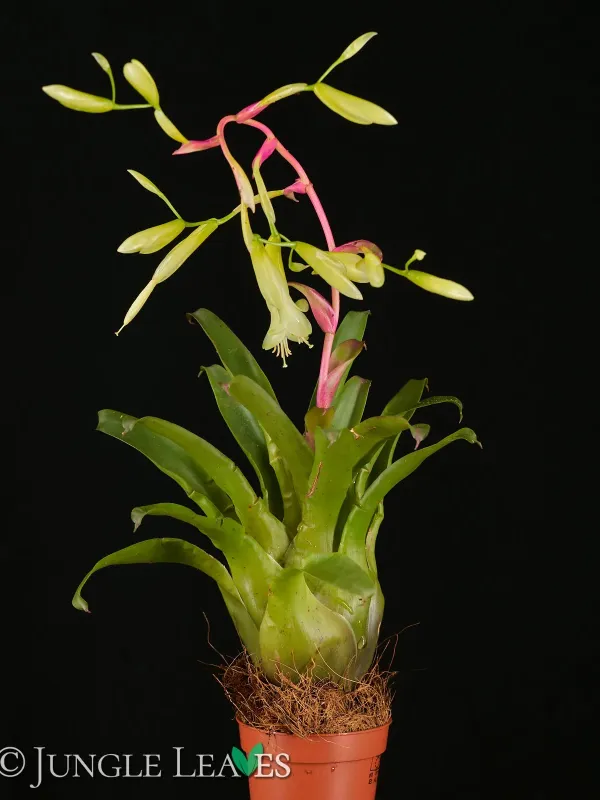
Description
Growing requirements
Vriesea delicatula is a member of the Bromeliaceae family, naturally occurring as an epiphyte in the tropical regions of South America. These plants typically inhabit high-canopy environments in rainforests, securing themselves to branches and trunks of larger trees.
Optimal growth requires a stable environment with temperatures between 20°C and 25°C. It is essential to avoid extreme temperature fluctuations and drafts, as the plant is sensitive to thermal shock which can quickly damage its foliage and crown structure.
Light requirements for this species are specific: it thrives under bright, filtered sunlight. Exposure to harsh direct sun will scorch the leaves, while insufficient light will lead to loss of plant vigor and failure to bloom, making careful placement near east or west windows ideal.
The planting medium must be highly porous and well-draining to mimic the epiphytic conditions of its native habitat. A mixture of pine bark, coarse peat, perlite, and charcoal provides the necessary air circulation for the root system, preventing compaction and moisture stagnation.
Watering techniques for Vriesea delicatula are unique due to the plant's rosette structure. Water should be poured into the central tank formed by the leaves, ensuring the water is clean and soft. Regular misting is also recommended to maintain high ambient humidity levels.
Main diseases and pests
The primary pests affecting Vriesea delicatula include scale insects and mealybugs, which settle in the leaf axils. These pests feed on the plant's sap, leading to stunted growth, discoloration, and increased vulnerability to secondary infections if left untreated.
Root rot is the most common disease, almost always caused by waterlogging of the substrate. If the growing medium remains saturated for too long without proper aeration, fungal pathogens easily colonize the roots, leading to irreversible decay of the plant base.
Cultural prevention is key to keeping the plant healthy. Ensuring that the central rosette does not contain stagnant or foul-smelling water and maintaining consistent, moderate humidity will significantly reduce the risk of both pest infestations and fungal attacks.
In case of infestation, mechanical removal of pests is the first line of defense. If chemical intervention is necessary, it is vital to select insecticides that are specifically labeled as safe for bromeliads, as some plants in this family are highly sensitive to oil-based sprays.
Monitoring the plant's health on a weekly basis helps detect early symptoms of disease. Yellowing leaf tips or dark spots at the base of the rosette are clear indicators that the irrigation schedule or substrate quality requires immediate adjustment for better performance.