
Vriesea dubia
Vriesea dubia
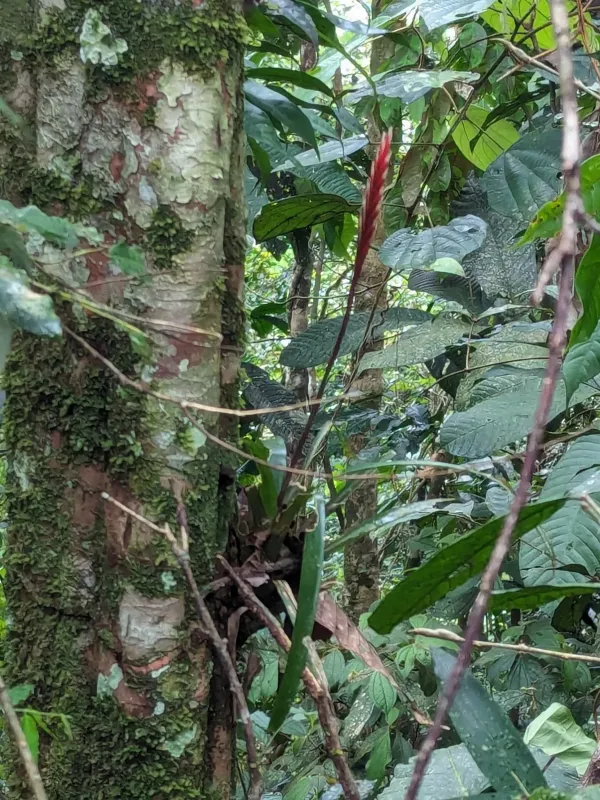
Description
Growing requirements
Vriesea dubia is an ornamental species belonging to the Bromeliaceae family. Originating from the tropical forests of Central and South America, it primarily grows as an epiphyte on trees, thriving in humid forest environments where it collects moisture through its specialized rosette.
The plant features a distinct rosette of tough, leathery leaves that form a central tank. This adaptation allows the plant to trap water and debris, which decomposes to provide nutrients in the nutrient-poor canopy habitat. Its inflorescence is highly valued for its striking, durable appearance.
Climate requirements for this species are centered on consistency. It requires temperatures between 20°C and 25°C and high atmospheric humidity. In a greenhouse or indoor setting, it is crucial to avoid cold drafts and sudden temperature fluctuations that can stress the plant's metabolism.
The growing medium must be highly porous and mimic the bark-rich environment of the rainforest. A mixture of pine bark, perlite, and peat moss provides the necessary aeration for the roots, preventing suffocation and ensuring proper drainage for the epiphytic root system.
Vriesea dubia is mainly cultivated for the commercial ornamental plant market. It is prized by landscape architects and greenhouse growers for its exotic aesthetics, slow growth habit, and ability to thrive in containers as an interior design element or a centerpiece in tropical collections.
Main diseases and pests
Root and basal rot are the most significant threats to Vriesea dubia, typically caused by overwatering or stagnant water in the central rosette during cooler months. Improving air circulation and using free-draining media are essential preventive agronomic practices.
Scale insects represent a major pest issue, as they attach themselves to the leaves and consume sap. They can be difficult to manage due to their protective coverings, requiring systemic insecticides or manual removal with alcohol-soaked cotton swabs.
Mealybugs are also common in greenhouse production environments. These pests create white, cottony masses in leaf axils and can cause significant foliage disfigurement if left untreated. Regular monitoring is key to preventing large-scale infestations.
Spider mites are frequently encountered in low-humidity conditions. These microscopic pests feed on the undersides of leaves, causing yellowing and webbing. Increasing humidity and introducing biological predators are effective ways to control mite populations sustainably.
Preventative care for Vriesea dubia includes periodic cleaning of the leaves to remove dust and ensuring that no standing water remains in the rosette during low-light periods. Proper management of these factors significantly reduces the likelihood of both fungal and insect outbreaks.