
Vriesea saundersii
Vriesea saundersii
Description
Growing requirements
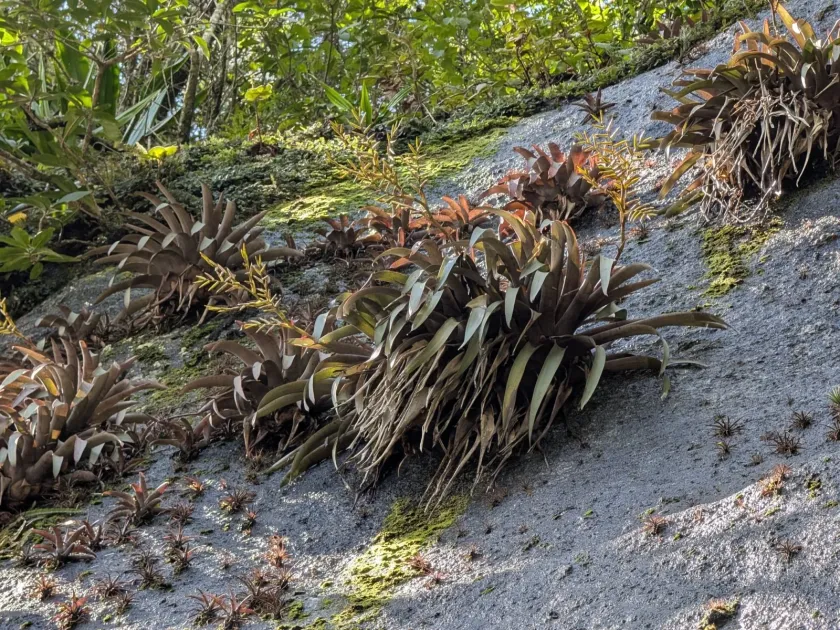
Vriesea saundersii is a fascinating epiphytic plant belonging to the Bromeliaceae family. Originating from the humid forests of Brazil, this species naturally grows on tree branches, where it thrives in filtered light and high atmospheric humidity.
The plant is prized for its ornamental rosette, composed of leathery, arching leaves. The foliage typically displays a grey-green hue, often patterned with dark, mottled markings, which adds to its exotic aesthetic and makes it a popular choice for indoor horticulture.
To successfully cultivate Vriesea saundersii, one must provide a stable temperature range between 20°C and 25°C. Like other bromeliads, it is sensitive to cold drafts and sudden temperature fluctuations, which can stress the plant and inhibit its growth.
Light management is crucial; these plants prefer bright, indirect light. Intense, direct sun exposure will scorch the leaves, while insufficient light can cause the plant to lose its vibrant leaf patterns and weaken the structural integrity of the rosette.
The growing medium should prioritize aeration and drainage. A coarse mix of orchid bark, perlite, and peat moss is recommended to mimic the natural epiphytic environment, ensuring that the roots remain well-oxygenated rather than sitting in stagnant water.
Main diseases and pests
The most common health issue for Vriesea saundersii is root rot, typically caused by overwatering or poor soil drainage. When the roots remain waterlogged, they become susceptible to pathogenic fungi, leading to the rapid decay of the plant base.
Scale insects are a persistent threat to this bromeliad. These pests attach themselves to the leaves, appearing as small, brown, waxy bumps. They extract sap from the foliage, weakening the plant and encouraging the growth of sooty mold.
Spider mites can become a problem in environments with low humidity. These microscopic pests create fine webbing between leaves and cause stippling damage, eventually leading to foliage discoloration and premature die-back if left untreated.
Mealybugs are another common pest, often hiding deep within the central rosette where they are difficult to access. Their presence is marked by white, cotton-like masses, which should be cleaned off immediately using a cotton swab dipped in isopropyl alcohol.
Prevention involves maintaining high ambient humidity and avoiding overhead watering that leaves stagnant water in the leaf axils for extended periods. Regular inspection of the plant base and leaf crevices is essential for early detection and effective control.