
Vriesea duvaliana
Vriesea duvaliana
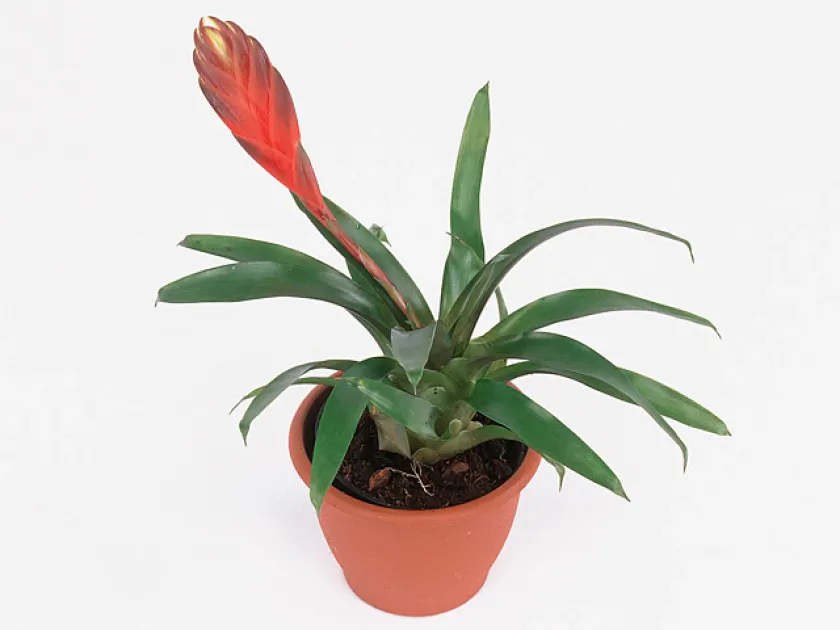
Description
Growing requirements
Vriesea duvaliana is an ornamental plant belonging to the Bromeliaceae family, native to the tropical rainforests of Brazil. As an epiphyte, it naturally anchors itself onto tree branches, absorbing moisture and nutrients through its specialized foliage rather than relying solely on soil-based nutrition.
To cultivate this species successfully, one must maintain a consistent temperature range between 20 and 25 degrees Celsius. The plant is highly sensitive to thermal fluctuations and cold drafts, both of which can significantly stress the plant and inhibit the development of its signature colorful bracts.
Bright, filtered light is essential for the health of Vriesea duvaliana. Exposure to direct sunlight often results in scorched leaves and faded coloration, while insufficient light can cause the plant to become etiolated and lose its compact, rosette-forming structure.
Irrigation must be performed by filling the central "tank" or urn formed by the leaves with lukewarm, soft water. It is crucial to replace the water in the rosette periodically to prevent the accumulation of minerals, bacteria, or decay, which could harm the plant's health.
The potting medium must be exceptionally well-draining and airy to simulate the plant's natural environment. A mix composed primarily of orchid bark, sphagnum moss, and perlite provides the necessary structure and acidity to support the root system without causing waterlogging or root rot.
Main diseases and pests
Scale insects and mealybugs are the most common pests affecting this culture. These insects inhabit the leaf axils and the undersides of leaves, extracting sap and weakening the plant, which often necessitates manual removal or the application of appropriate biological control agents.
Pathogenic conditions such as crown rot and various fungal infections frequently stem from excessive soil moisture or stagnant water. Maintaining a dry, well-ventilated environment around the plant base is vital to prevent these threats and ensure the longevity of the ornamental rosette.