
Vriesea simplex
Vriesea simplex
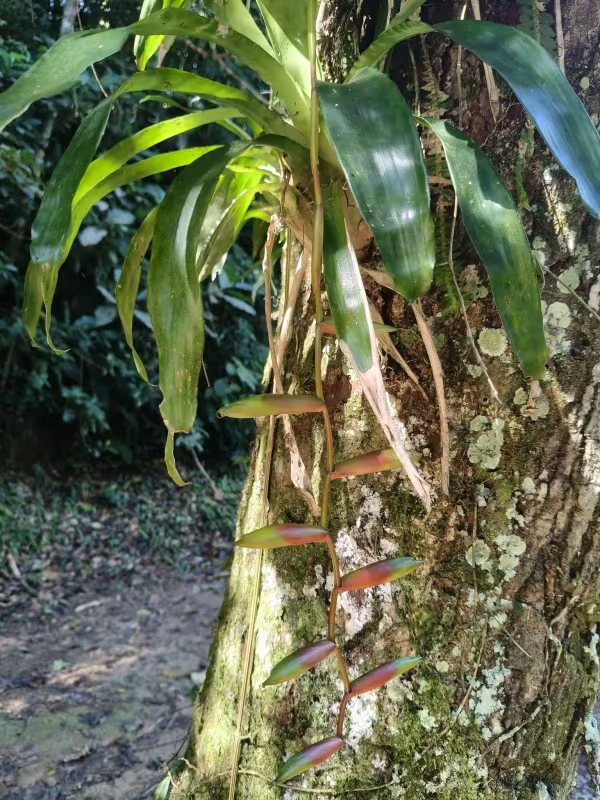
Description
Growing requirements
Vriesea simplex is a member of the Bromeliaceae family, native to the tropical forests of Central and South America. As an epiphyte, it naturally grows on the branches of trees rather than in the soil, utilizing its roots mainly for physical stability.
The plant is defined by its basal rosette of stiff, sword-shaped leaves that form a tank for capturing rainwater. This unique adaptation allows the plant to survive in its native canopy habitat by storing moisture and debris for nutrients.
For cultivation purposes, this species thrives under bright, filtered light conditions. In indoor environments, avoiding harsh midday sun is crucial to prevent leaf scorching and desiccation of the delicate tissues.
An ideal growing medium for Vriesea simplex should be highly porous, consisting of coarse bark, perlite, and a small amount of peat. Good drainage is non-negotiable to prevent root suffocation and maintain healthy development.
Temperature management is key; the plant requires a stable environment between 20 and 25 degrees Celsius. It also benefits significantly from high ambient humidity levels, which can be maintained by regular misting or using a pebble tray.
Main diseases and pests
Common pests affecting Vriesea simplex include mealybugs and scale insects, which often hide deep within the base of the leaves and are difficult to remove manually.
Overwatering or poor ventilation is the primary cause of fungal infections, leading to black rot and crown decay, which can quickly prove fatal to the plant.
Spider mites may become a nuisance in dry or arid environments, showing up as fine webbing on the undersides of leaves and leading to loss of vibrancy.
To control infestations, apply suitable systemic horticultural soaps or specific insecticides, ensuring to penetrate the dense leaf junctions where pests often congregate.
Regular maintenance, including flushing the central rosette with clean water, helps prevent the accumulation of minerals and prevents the spread of pathogens.