
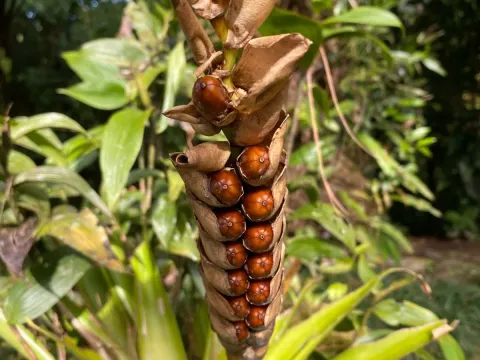
Werauhia
Werauhia
Werauhia is a genus of herbaceous perennial epiphytic plants belonging to the Bromeliaceae family. These plants are native to the tropical regions of Central and South America, where they thrive in humid forests ranging from sea level up to cloud forest belts.
What the section contains

Werauhia
In their natural environment, Werauhia prefers a consistently warm climate with high air humidity. For optimal development, the plant requires diffused sunlight, as direct exposure can cause scorch marks on the leaf surfaces.
The growing medium for Werauhia must be loose, well-aerated, and have excellent drainage. It is best to use a substrate based on conifer bark, sphagnum moss, charcoal, and peat fiber to ensure adequate oxygen circulation around the roots.
Watering the plant has specific requirements: it is recommended to pour water directly into the central leaf rosette, which serves as the primary reservoir for nutrients. It is crucial to use soft, room-temperature water, avoiding stagnant water in the saucer.
The temperature should be maintained between 20 and 25 degrees Celsius during the summer months. In winter, the plant benefits from cooler conditions, but not below 15 degrees, with protection from drafts being essential, as they are detrimental to tropical species.
Typical pests for Werauhia in greenhouse or indoor environments include mealybugs and scale insects. These parasites settle in the leaf axils, making early detection difficult during regular inspections.
If humidity levels are not managed or if water stagnates in the rosette, fungal diseases such as root and stem rot frequently develop. This leads to the rapid necrosis of plant tissues and the potential death of the entire specimen.
To prevent the spread of diseases, it is necessary to regularly inspect the plant and remove any dead or damaged foliage. Gently wiping the leaves with a damp cloth can also help reduce the risk of insect colony establishment.
Systemic insecticides should be used only as a last resort, as the delicate tissues of bromeliads can be sensitive to harsh chemical treatments. It is preferable to use biological control methods whenever possible.
Maintaining proper ventilation within the growing area significantly reduces the likelihood of mold and rot infections, ensuring the healthy growth and longevity of the plant throughout its life cycle.