
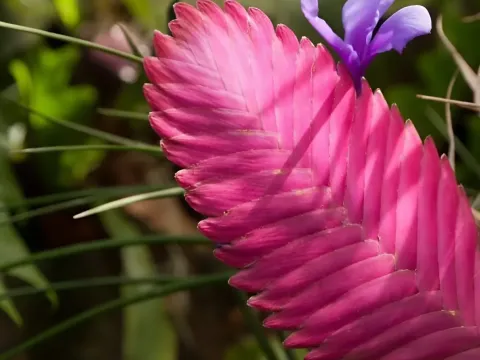
Wallisia
Wallisia
Wallisia is a genus of epiphytic plants belonging to the Bromeliaceae family. These plants are native to the tropical forests of Central and South America, where they naturally grow on branches and tree trunks, absorbing moisture from the air.
What the section contains


Wallisia
The plants require bright, indirect light to thrive and bloom. Direct sunlight should be avoided as it can scorch the foliage, while insufficient light may prevent the development of the characteristic colorful inflorescences.
A loose, well-draining potting medium is essential to prevent root rot. Specialized orchid or bromeliad mixes, consisting mainly of pine bark, perlite, and peat moss, provide the necessary aeration and moisture retention balance.
Watering techniques are unique for Wallisia: the water should be poured directly into the central tank or rosette of the leaves. It is important to use soft or distilled water to avoid mineral buildup that can harm the plant.
Maintaining high humidity is crucial for the health of Wallisia. Frequent misting or placing the plant on a pebble tray filled with water helps replicate the humid environment of its native tropical habitat.
Root and crown rot are the most frequent diseases, typically resulting from overwatering or poor air circulation. When the base of the plant remains soggy for too long, bacterial and fungal pathogens quickly take hold.
Mealybugs are common pests that hide in the tight spaces between leaves. Their presence can be identified by the white, cotton-like substance they leave behind, which requires manual removal and insecticidal treatment.
Scale insects can attach themselves to the leaves, feeding on sap and causing yellow spotting. These pests are hard-shelled and require systemic treatment to be effectively eliminated from the plant.
Spider mites can become a nuisance if the plant is kept in dry, warm conditions for an extended period. They cause stippling and discolouration, significantly weakening the plant's structural integrity.
To ensure healthy growth, always monitor the leaf axils for pests and ensure that the water in the rosette is refreshed periodically to prevent stagnation and the growth of larvae or fungi.