
Vriesea gigantea
Vriesea gigantea
Description
Growing requirements
Vriesea gigantea is a striking perennial plant belonging to the Bromeliaceae family. Native to the tropical forests of Brazil, it is primarily an epiphyte, meaning it typically grows on the trunks or branches of trees, deriving moisture and nutrients from the air and decaying debris trapped in its foliage.
The cultivation of this species requires a warm and humid environment, ideally maintaining temperatures between +20°C and +25°C. High atmospheric humidity is critical for the health of the plant, and it is recommended to keep it consistently above 70%, alongside excellent air ventilation to prevent mold growth.
For container cultivation, a specialized well-draining substrate is mandatory. A mixture consisting of pine bark, sphagnum moss, charcoal, and a small portion of peat provides the necessary structural integrity and aeration for the roots, preventing suffocation or rot due to excess water.
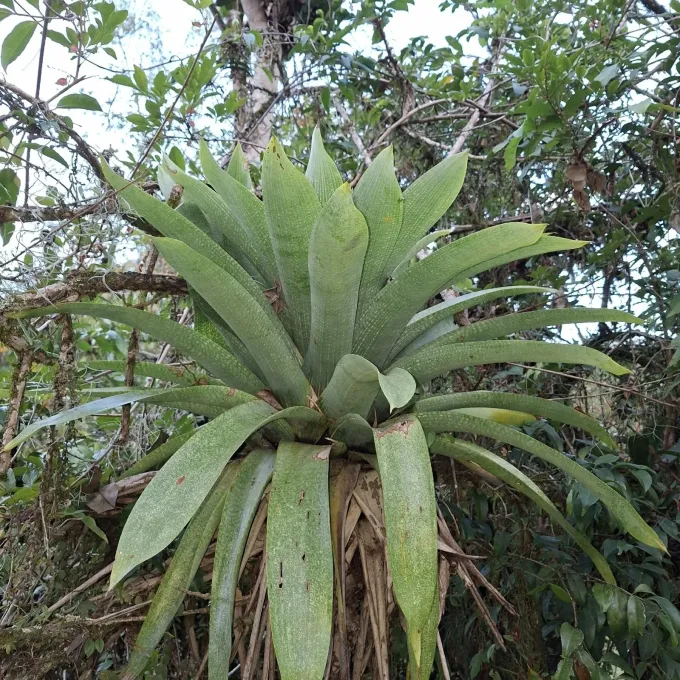
Botanically, Vriesea gigantea is characterized by a massive, tank-like rosette of wide, leathery leaves. This central tank is an evolutionary adaptation that allows the plant to capture rainwater and leaf litter, which provides a reservoir of hydration and nutrients in its native rainforest habitat.
In terms of agricultural and ornamental use, this plant is a staple in professional botanical gardens and high-end interior landscaping. Its imposing size and unique foliage make it an essential specimen for tropical displays, serving as a focal point in indoor environments designed for exotic plant diversity.
Main diseases and pests
Pest pressures primarily include mealybugs, scale insects, and spider mites. These pests thrive in indoor conditions with poor air circulation, often colonizing the base of the leaves where moisture tends to linger. Early detection and mechanical removal are standard management practices.
The most significant threat to plant health is root and crown rot, typically caused by overwatering or poor drainage. To mitigate this risk, it is essential to ensure that the central tank is regularly flushed with fresh water to avoid salt buildup, while keeping the substrate moist but never waterlogged.