
Vriesea-Tillandsia
Vriesea Lindl. x Tillandsia L.
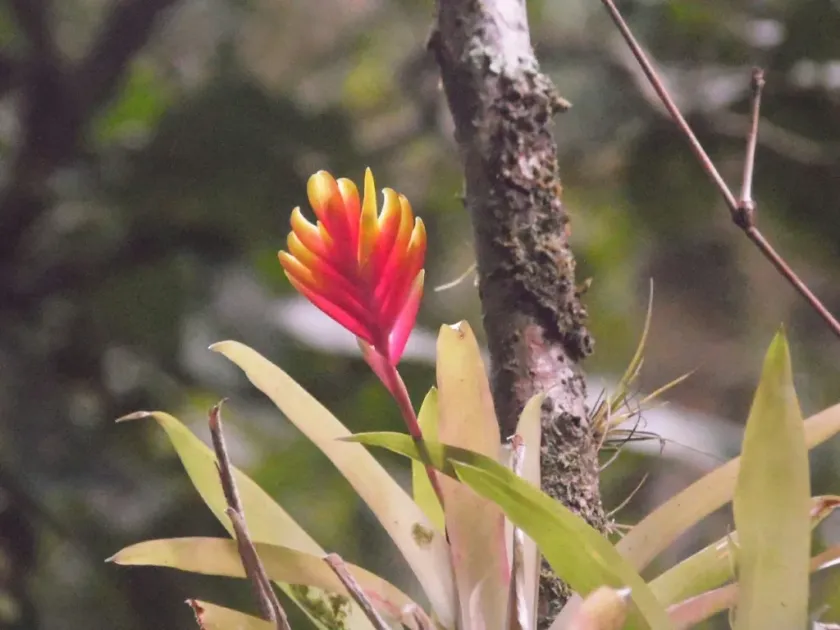
Description
Growing requirements
Vriesea and Tillandsia belong to the Bromeliaceae family and are popular ornamental epiphytic plants. Native to the tropical regions of Central and South America, these species have evolved to thrive in high-humidity environments where they anchor themselves to trees or rocks.
The climate requirements for these plants include a consistent warm environment. Ideally, temperatures should remain between 20 to 25 degrees Celsius during the day, with a minimum of 16 degrees Celsius at night, as these plants are sensitive to cold shocks.
The soil, or growing medium, must be highly porous and well-draining to mimic the natural epiphytic habitat. A mixture consisting of pine bark, sphagnum moss, perlite, and a small portion of peat is recommended to ensure optimal root aeration and moisture regulation.
Proper light exposure is essential for maintaining the health of the leaves and the vitality of the inflorescence. These plants require bright, indirect light; direct sunlight should be avoided as it can cause significant damage to the leaf structure and pigments.
Watering techniques for the Vriesea-Tillandsia complex are distinct from terrestrial plants. Water should be poured into the central rosette (cup) and occasionally misted onto the foliage. Using distilled or rain water is preferred to prevent mineral salt buildup on the leaves.
Main diseases and pests
Common pests affecting these plants include scale insects, mealybugs, and spider mites. These pests typically cluster in the crevices of the rosette or on the undersides of the leaves, drawing sap and weakening the plant's structural integrity.
Fungal rots, specifically heart rot of the rosette, are a major threat typically caused by stagnant water or poor air circulation. To manage this, ensure the water in the rosette is refreshed regularly and provide adequate air movement to prevent fungal pathogen buildup.
Leaf spot diseases can occur due to fluctuations in humidity levels or exposure to contaminated water. Managing the environment is the first line of defense; if infections persist, localized application of fungicides approved for bromeliads may be necessary.
Preventative maintenance involves careful inspection of the foliage during routine care. Removing dead or decaying leaves promptly prevents the development of secondary bacterial infections that thrive in the moisture-rich center of the rosette.
Nutrient management is crucial as excessive fertilization can make the plant more susceptible to pest attacks. Only use specialized, water-soluble fertilizers for bromeliads at half the recommended strength to ensure healthy growth without forcing stress on the plant.