
Vriesea bituminosa
Vriesea bituminosa
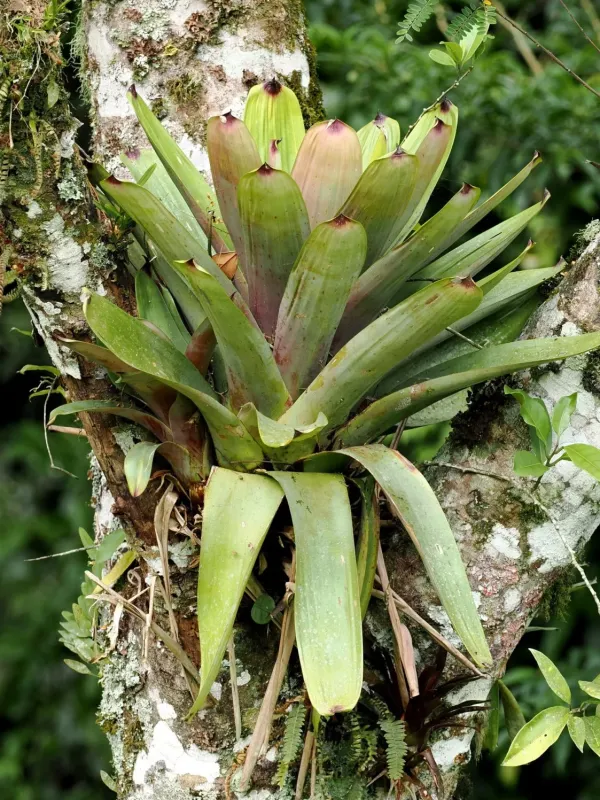
Description
Growing requirements
Vriesea bituminosa is a notable member of the Bromeliaceae family, native to the tropical forests of Brazil. As an epiphyte, it grows on trees and utilizes its distinct leaf rosette to capture water and nutrients from the environment.
The plant thrives in warm conditions, with an ideal temperature range between 20°C and 26°C. It is highly susceptible to chilling injury and must be protected from cold drafts and sudden drops in ambient temperature.
Maintaining high relative humidity is essential for this species. In cultivation, it is recommended to keep humidity levels above 65%, which can be achieved through regular misting or using ultrasonic humidifiers in the growing area.
For soil and medium requirements, a well-draining substrate is mandatory to prevent root suffocation. A mix consisting of orchid bark, perlite, and peat moss provides the necessary aeration and moisture-holding capacity for a healthy root system.
Light requirements for Vriesea bituminosa involve bright, filtered sunlight. Direct sun exposure can scorch the foliage, while insufficient light may result in the loss of the plant's characteristic vibrant color and sluggish growth.
Main diseases and pests
Mealybugs and scale insects represent the most frequent pest threats to this plant. They often hide in the tight crevices between leaves, making monitoring and control a significant part of the agricultural management.
Rot is the primary pathological threat, typically induced by poor drainage or overly cool, damp conditions. Ensuring that the water in the tank remains fresh and that the base of the plant is not waterlogged is crucial for survival.
Fungal infections, such as leaf spot, are often secondary to environmental stress. Proper spacing between plants to allow for airflow helps to mitigate these risks effectively in commercial production.
Mineral stress can manifest as chlorosis, often caused by the use of tap water with high mineral content. Using deionized or distilled water is highly recommended to maintain leaf integrity.
Constant observation is key to pest management. Integrated Pest Management (IPM) strategies, including the use of neem oil or insecticidal soaps, are generally effective if the infestation is detected at an early stage.