
Vriesea zamorensis
Vriesea zamorensis
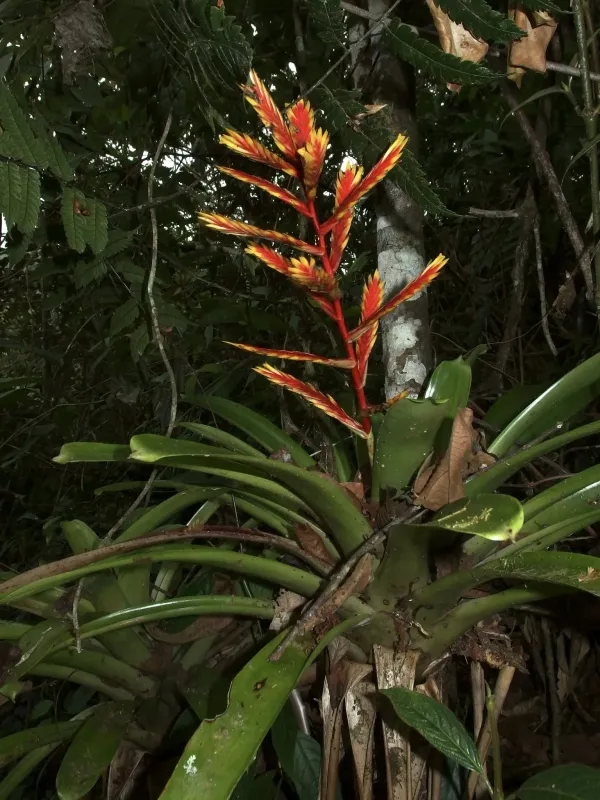
Description
Growing requirements
Vriesea zamorensis is a member of the Bromeliaceae family. As an epiphytic plant originating from the rainforests of Ecuador, it is adapted to growing on vertical surfaces, which defines its specific requirements for substrate and humidity.
The culture requires bright, indirect light to thrive. Exposure to direct intense sunlight can damage the leaves, while insufficient light leads to a loss of foliage coloration and weakened growth of the inflorescence.
Environmental conditions must mimic tropical habitats with high ambient humidity, ideally between 70% and 80%. Temperature stability is crucial, with an optimal range between 20°C and 25°C, ensuring the plant remains active throughout the year.
The substrate must be highly porous to ensure excellent drainage. A mix comprising pine bark, perlite, and sphagnum moss is recommended to provide both the necessary air circulation for the roots and adequate moisture retention.
Irrigation management involves keeping the central leaf rosette filled with water. It is essential to flush the rosette periodically with fresh, soft water to prevent the accumulation of minerals and the stagnation of liquids.
Main diseases and pests
Scale insects and mealybugs are the primary pests that affect Vriesea zamorensis. They typically colonize the base of the leaves and the inner part of the rosette, where they feed on plant sap.
Root and crown rot represent the most significant threats to the plant's survival. These conditions are usually triggered by excessive moisture coupled with poor air circulation or low temperatures.
Management of pest populations requires careful monitoring and the application of contact or systemic insecticides if manual removal is insufficient. Care must be taken to avoid heavy chemical residues within the water-holding rosette.
Preventative measures include maintaining optimal spacing between plants in greenhouse conditions to promote airflow and keeping the growing environment clean from debris.
Monitoring for any signs of leaf discoloration or softening of the leaf base is critical, as these are often the first symptoms of underlying pathogenic or physiological stress in this species.