

Description
Symptoms
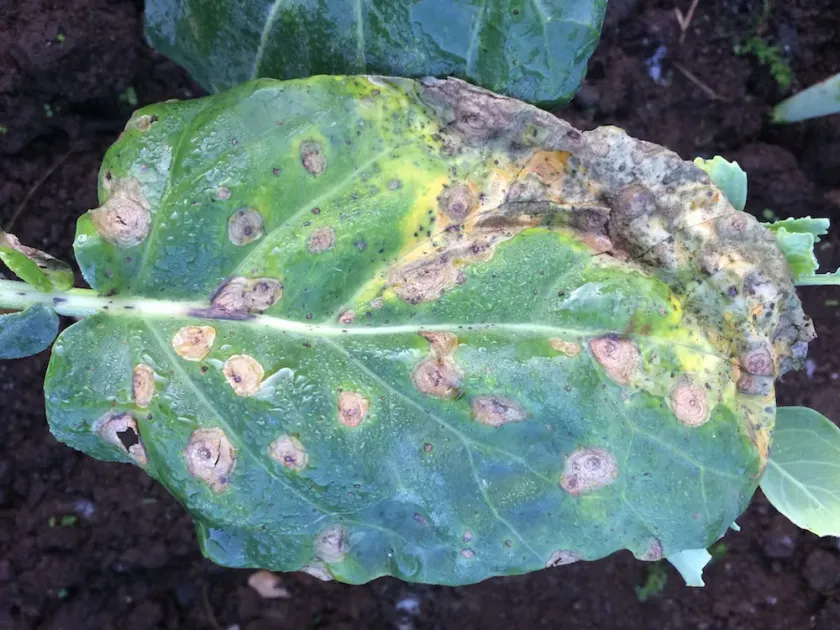
The initial signs of macrosporiosis appear as small, dark brown or black spots on the lower leaves of the plant. As the disease progresses, these spots expand and often develop concentric rings, giving them a "target-like" appearance.
A distinctive diagnostic feature is the presence of a velvety, dark-colored mold on the surface of the lesions, which is the fungal sporulation. In dry conditions, the infected tissue becomes brittle, often cracking and falling out, creating small holes.
The pathogen also affects stems and fruits. On stems, it forms elongated dark lesions that can cause the plant to lodge or break. Fruits are marked by sunken, dark spots with a velvety texture, which often compromise their quality.
As the infection spreads, the leaves turn yellow and eventually drop off prematurely, leading to severe defoliation. This significantly reduces the photosynthetic capacity of the plant and hinders the development of the harvest.
- Circular spots with concentric rings.
- Velvety dark fungal growth on spots.
- Brittle leaf tissue and holes.
- Sunken lesions on fruits and stems.
- Premature leaf drop and wilting.
Pathogen
Macrosporiosis is a fungal disease caused by fungi of the genus Macrosporium, which are closely related to the Alternaria complex. These pathogens thrive in soil, plant debris, and can even survive within seeds, posing a constant threat to crops.
The fungus typically infects plants by penetrating through stomata or mechanical tissue damage. Once inside, it produces conidia that are easily dispersed by wind, rain splashes, and human activity, facilitating rapid transmission throughout the field.
The biology of the pathogen relies on its ability to rapidly multiply during moist conditions. By releasing specific enzymes and toxins, the fungus breaks down plant cell walls, leading to tissue necrosis and weakening the overall plant structure.
Survival strategies include a saprophytic stage, where the fungus lives on dead plant matter during winter. This makes strict sanitation and the removal of post-harvest crop residues vital components of any effective disease management strategy.
Due to the genetic variability of Macrosporium, the fungus can adapt to various environmental conditions. This adaptability makes it challenging for farmers to manage, emphasizing the need for robust integrated pest management (IPM) practices.
Conditions for development
Macrosporiosis thrives in warm, humid weather conditions with frequent rainfall. The optimal temperature range for spore germination is between 20 and 28 degrees Celsius, combined with high relative humidity.
Conditions such as dew, fog, or overhead irrigation keep plant surfaces moist for extended periods, providing perfect opportunities for the pathogen to establish itself. Poor ventilation in dense plantings exacerbates these issues by maintaining high humidity levels.
Plant stress, often caused by sudden temperature shifts, drought, or nutrient imbalances, lowers the natural defense mechanisms of the crop. This makes plants significantly more susceptible to successful fungal penetration.
The spread of the fungus is largely driven by wind currents carrying spores across fields. Rain splashes also play a crucial role by transporting spores from the soil onto the lower foliage, triggering a new cycle of infection.
Long-term mono-cropping of susceptible species leads to the accumulation of high spore densities in the soil. Without appropriate crop rotation, the risk of an outbreak increases significantly with every planting season.
Why it matters
The primary economic harm caused by macrosporiosis is a significant reduction in crop yield. Due to severe defoliation, plants fail to provide enough energy for fruit filling, resulting in smaller and poorer quality yields.
Infected fruits are frequently unmarketable due to their unsightly lesions. Furthermore, these wounds serve as entry points for secondary pathogens like soft-rot bacteria, which can cause total decay during storage and transit.
The disease drains the energy reserves of the plant, leaving it vulnerable to further environmental stress and insect pests. This results in stunted growth and a general decline in the vitality of the entire crop population.
Financial losses are compounded by the high costs of frequent fungicide applications and the labor required to manage the disease. In severe cases, the loss of the crop can lead to total financial failure for the season.
The persistence of the pathogen in the soil forces farmers to abandon susceptible crop rotations. This limits land use and complicates the planning of agricultural operations in subsequent years.
Protection
Integrated disease management is essential for controlling macrosporiosis, starting with proactive cultural practices. Crop rotation is the most effective way to break the life cycle of the fungus and reduce soil-borne inoculum.
Strict field sanitation, including the removal and destruction of crop residues, is necessary to minimize overwintering sites for the pathogen. Deep plowing can also help bury and decompose infected material more efficiently.
Choosing resistant or tolerant cultivars is a foundational step in prevention. Furthermore, using certified, disease-free seeds treated with appropriate fungicides provides protection during the crucial seedling stage.
Once initial symptoms are detected, the application of contact or systemic fungicides is required. Alternating between different chemical classes is vital to prevent the development of resistance in the fungal population.
Optimizing plant spacing to improve airflow, practicing precise irrigation management, and maintaining balanced soil fertility—particularly potassium levels—can significantly strengthen plant immunity against the disease.
Content graph
Connections · Macrosporiosis
Most often together:
Marketplace
Products · 77
All 77
Tomato 34
Fungicides 24
Potato 9
Plant Growth Regulators 3
Tulips 2
Insecticides, Acaricides 1
Corn 1
Cucumber 1
Eggplant 1
Soybean 1





Kulon
Три Дельта Компані Інтернешнл, Гонконг, Китай.
Fungicides
0
0
·
986
1 offer
14.37 €per 1 l
Buy






LUX MAXI-PROTECTION
ТОВ «Фабрика агрохімікатів», Черкаси, Україна
Insecticides
0
0
·
39
4 offers
12 €per 1 l
Buy


Likar Roslyn, WP, fungicide (metalaxyl, 80 g/kg + mancozeb, 640 g/kg)
Jiang'an Agrin Company Ltd.
Fungicides
0
0
·
34
1 offer
11.35 €per 1 l
Buy





Community
Discussion
No discussions yet — be the first.