
Pseudomonas syringae
Pseudomonas syringae
Description
How to identify
Pseudomonas syringae is a Gram-negative, rod-shaped bacterium belonging to the kingdom Bacteria and the genus Pseudomonas. This highly adaptable phytopathogen uses polar flagella for motility, allowing it to move rapidly in water films on the leaf surface.
As a facultative parasite, the bacterium can survive for long periods in plant debris, soil, or seeds. It is well-known for its ability to produce ice-nucleation proteins, which facilitate frost damage to host tissues, creating entry points for infection.
The species consists of numerous pathovars, each specialized to infect specific plant hosts. This vast genetic diversity makes the pathogen incredibly resilient and capable of evolving resistance to traditional agricultural practices.
Transmission primarily occurs via water splash, wind, insect vectors, and contaminated tools. Once reaching the host, the bacteria enter through natural openings such as stomata or wounds caused by wind, hail, or agricultural operations.
The life cycle is dictated by environmental moisture levels. Once inside the apoplast, the bacteria multiply and secrete a cocktail of phytotoxins and extracellular enzymes that break down plant tissues to extract nutrients for population expansion.
What it damages
This pathogen has a vast host range, impacting fruit trees like cherries and apples, vegetable crops like tomatoes and beans, and various cereal grains. It causes significant economic losses in intensive agriculture worldwide.
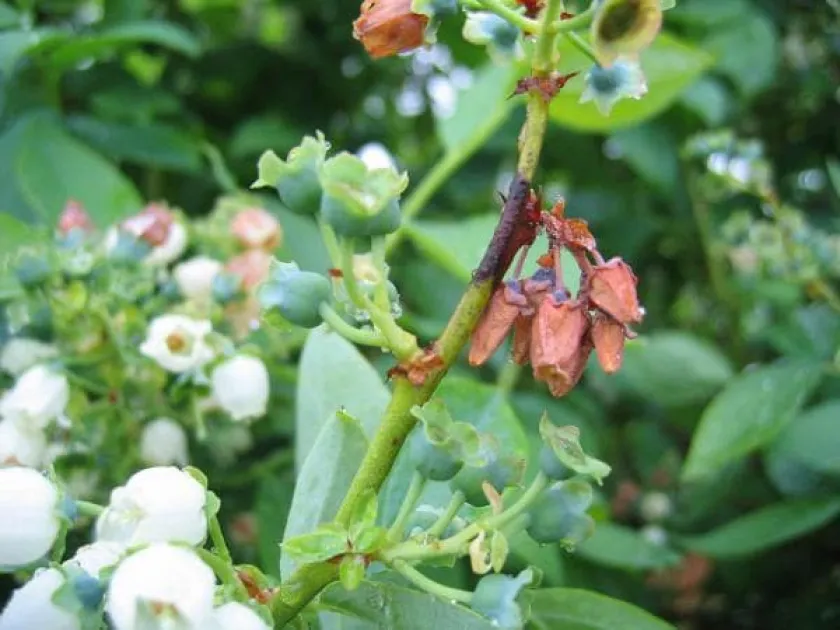
In stone fruits, the bacteria cause severe blossom and shoot blight, leading to flower death and branch dieback. In severe cases, systemic infection can kill entire trees, as the pathogen spreads through the xylem and phloem.
For vegetable crops, the pathogen results in bacterial spot disease, affecting both foliage and fruit. Infected fruit develops unsightly, sunken lesions that lower market quality and can lead to secondary soft rot infections.
Cereals suffer from bacterial streak or stripe diseases, which drastically reduce the leaf surface available for photosynthesis. This results in stunted growth, lower grain filling, and an overall reduction in crop yield and quality.
The pathogenicity is heightened by the ability to cause systemic vascular wilting, which compromises the plant's hydraulic system, leading to rapid water stress and the eventual death of the affected plant organs.
When it appears
The pathogen is most active during cool, wet spring and early summer months. High humidity levels and rainfall provide the necessary conditions for the bacteria to thrive and move between plant surfaces.
Frost events during the spring are particularly dangerous. Because the bacteria act as ice nuclei, they promote freezing damage to buds and blossoms, which provides an easy pathway for the pathogen to colonize the interior of the plant.
During hot, dry summer weather, the activity of Pseudomonas syringae typically slows down. However, the bacteria remain in a latent state, persisting on the plant surfaces or in protected cracks, waiting for the return of favorable conditions.
Autumn rains often trigger a secondary infection phase, as the bacteria move from senescing leaves to the woody parts of the plants. Here, they can colonize bark crevices and dormant buds to survive throughout the winter.
The pathogen spends the winter in a quiescent state within bark, buds, or soil. As soon as temperatures begin to rise in early spring, the bacteria resume activity, completing their survival cycle and initiating new infections.
Signs of infestation
Early signs of infection typically manifest as small, water-soaked spots on leaves. These spots eventually become necrotic and are often surrounded by a characteristic yellow chlorotic halo.
- Brown to black necrotic lesions on leaves and stems.
- Water-soaked spots on fruit that turn dark and sunken over time.
- Bacterial ooze (exudate) visible on infected stems or branches.
- Wilting and death of blossoms and young shoot tips.
- Cankers on branches that may lead to structural deformities.
In humid conditions, the presence of a sticky bacterial exudate on the bark or fruit is a definitive indicator of an active bacterial infection. This exudate is rich in bacteria and serves as the primary inoculum for further spread.
When the vascular system is affected, the plant may show sudden wilting, often starting at the tips. Cutting into the stem may reveal discoloration of the vascular bundles, indicating internal colonization by the pathogen.
Field diagnosis can be supported by the "streaming test," where an infected tissue sample is placed in water, and the outflow of bacterial mass can be observed as a cloudy thread emanating from the sample.
Control measures
The foundation of effective control is integrated pest management (IPM). Using certified disease-free planting material and resistant cultivars is the most reliable strategy to minimize the impact of Pseudomonas syringae.
Cultural practices are essential; this includes regular pruning of infected branches during dry weather and the thorough sterilization of pruning tools with alcohol or copper-based disinfectants to prevent cross-contamination.
Chemical control focuses on the use of copper-based bactericides applied preventatively before the start of wet spring weather or during the bloom period. These treatments serve to reduce the bacterial population on the plant surface.
Biological control agents, such as specific strains of beneficial bacteria that compete for nutrients and space, can be applied to foliage to suppress the establishment of Pseudomonas syringae populations.
Managing insect pests is crucial, as their feeding activities create wounds that act as infection sites. Maintaining optimal plant nutrition—specifically avoiding excessive nitrogen fertilization—helps plants maintain better structural integrity and natural resistance.
Discussion
No discussions yet — be the first.