

Description
Symptoms
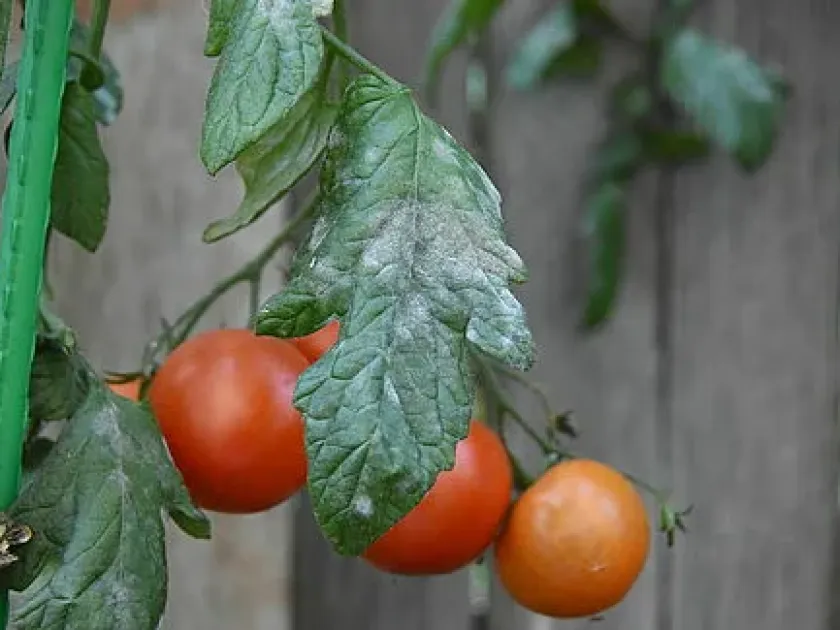
The hallmark symptom is the appearance of small, white, circular patches of powdery fungal growth on the upper surface of the leaves. Over time, these patches enlarge and eventually cover the entire leaf area.
As the infection progresses, the foliage begins to yellow and become chlorotic. If left unmanaged, the leaves will eventually turn brown, necrotic, and die, leading to premature defoliation.
The powdery growth can also be found on the undersides of leaves, on stems, and sometimes on the calyx of the fruit, although it is less common to see it on the fruit skin itself.
Affected leaves often curl upward and become brittle. Because the fungus inhibits photosynthesis, the entire plant exhibits stunted growth and reduced vigor compared to healthy specimens.
Distinguishing it from downy mildew is crucial; powdery mildew growth is superficial and rubs off easily, whereas other blights often show distinct, water-soaked, or vein-limited lesions.
Pathogen
The causal agent of this disease is the fungus Golovinomyces lycopersici, an obligate parasite that requires living host tissue to complete its life cycle. It is one of the most significant pathogens affecting greenhouse-grown tomatoes worldwide.
The fungus produces a superficial mycelium that grows across the surface of the tomato leaves, stems, and petioles. It anchors itself to the plant using haustoria, which penetrate the plant cells to absorb nutrients.
Reproduction is primarily asexual, involving the production of numerous conidia. These spores are wind-dispersed and can travel long distances, leading to rapid disease spread within confined environments like greenhouses.
Unlike some other fungal pathogens, Golovinomyces lycopersici does not require free water on the leaf surface to germinate, which allows it to thrive in a variety of humidity conditions.
The pathogen is highly specialized and can persist on alternative hosts or crop debris, making sanitation a critical aspect of disease management in any tomato production system.
Conditions for development
The disease thrives in warm, humid conditions, with an optimal temperature range of 20°C to 25°C. However, it can survive and proliferate in a wide range of temperatures.
Poor ventilation and high humidity within greenhouses are the primary drivers for disease outbreaks. Stagnant air allows spores to settle and germinate on susceptible plant surfaces.
Densely planted crops create a microclimate that prevents airflow, creating an environment where the fungus can spread from plant to plant with high efficiency.
Plants that are stressed due to inadequate light, imbalanced nutrition, or extreme temperature fluctuations are significantly more susceptible to successful infection by Golovinomyces lycopersici.
The absence of intense direct sunlight also favors the fungus, as ultraviolet radiation can inhibit spore germination and kill mycelium on the surface of exposed leaves.
Why it matters
The most significant impact is the drastic reduction in photosynthetic capacity, which directly correlates to yield loss. As leaves die, the plant cannot support fruit development.
Fruit quality is also heavily compromised. Tomatoes may become undersized, poorly colored, and have reduced sugar content, leading to a bland flavor profile and shorter shelf life.
Defoliation exposes the fruit to direct sunlight, causing sunscald, which further reduces the marketable yield of the tomato crop and leads to significant economic loss.
The plant's weakened state makes it a target for secondary infections, such as grey mold (Botrytis cinerea), which can further destroy the plant tissue.
In high-intensity greenhouse systems, an untreated powdery mildew outbreak can render a crop unprofitable within just a few weeks due to the rapid rate of disease progression.
Protection
Integrated Pest Management (IPM) is essential. Start with sanitation: remove and destroy all infected plant material promptly to reduce the initial inoculum level.
Improve air circulation by adjusting plant spacing and implementing regular pruning or leaf-thinning, which helps lower the humidity around the canopy.
Biological control agents, such as specific strains of Bacillus subtilis or certain fungal antagonists, can be applied preventatively to inhibit fungal growth.
Chemical control using systemic fungicides, such as sulfur-based products or synthetic compounds like triazoles, should be applied upon the first sign of symptoms, alternating groups to prevent resistance.
- Maintain good greenhouse hygiene and disinfect structures.
- Select tomato varieties known for powdery mildew resistance.
- Ensure balanced nutrition, avoiding excessive nitrogen that promotes lush, susceptible growth.
Reference
Connections · Tomato powdery mildew
Most often together:
Marketplace
Products · 48







Community
Discussion
No discussions yet — be the first.