
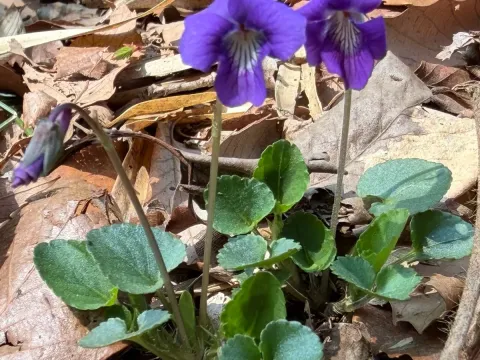
Blunt-leaved violet
Viola obtusa
Viola obtusa, commonly known as the blunt-leaved violet, belongs to the Violaceae family. It is a perennial plant native to East Asia, thriving in woodland environments across regions like Japan and the Korean Peninsula.
What the section contains
Blunt-leaved violet
The plant grows best in nutrient-rich, well-draining soils. A consistent moisture level is critical, and the soil should ideally have a slightly acidic to neutral pH balance for optimal root health.
In terms of climate, Viola obtusa prefers cool and shaded conditions. It is well-adapted to the temperate climate of forest floors where dappled sunlight prevents the leaves from scorching.
Botanically, it is characterized by its compact habit and distinctive foliage shape. The flowers are typically small and subtle, making it an excellent candidate for woodland gardens or ground cover.
Agricultural management includes ensuring adequate mulch to maintain soil coolness and humidity during the summer months, which supports the plant’s natural physiological needs.
The primary threats to Viola obtusa are fungal pathogens such as leaf spot and root rot, often triggered by poor drainage or overly humid environmental conditions.
Powdery mildew can become a significant issue if plants are crowded together, as it inhibits photosynthesis and causes premature leaf drop.
Pests such as aphids and spider mites are known to infest the plant during dry spells, damaging the foliage and weakening the overall vigor of the plant.
Mollusks, including slugs and snails, are particularly problematic, often causing substantial physical damage to the leaves during damp spring weather.
Effective management requires maintaining good air circulation around the plants and removing infected debris immediately to prevent the spread of diseases.