
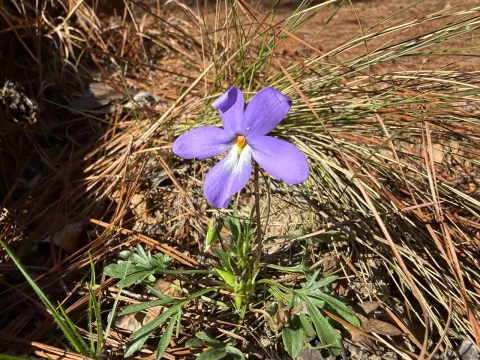
Bird's-foot violet
Viola pedata
Bird's-foot violet seeds require cold stratification to break dormancy. Sowing should ideally be done in late autumn to allow the seeds to experience winter conditions naturally in the soil.
What the section contains
Bird's-foot violet
If sowing indoors or in spring, seeds must be kept in the refrigerator at low temperatures for 60 to 90 days. Moistened vermiculite or a damp paper towel can be used to facilitate this process.
After the chilling period, sow the seeds on the surface of a well-draining, sterile potting mix. Provide bright, indirect light to encourage germination, which typically occurs within a few weeks.
Maintain consistent moisture but ensure the medium does not become waterlogged. A humidity dome or clear plastic bag can help maintain an appropriate microclimate until the first true leaves appear.
Transplanting seedlings into the garden should only happen once the threat of spring frost has completely passed. Acclimatize young plants to outdoor conditions gradually over several days.
Viola pedata belongs to the Violaceae family and is native to open, sandy, and rocky habitats in Eastern North America. It is a highly specialized plant that thrives in nutrient-poor soils.
The plant requires full sun exposure to maintain its compact form and prolific blooming. In partial shade, the plant often becomes leggy and produces fewer flowers throughout the season.
Well-draining, sandy or gravelly soil is essential. It is highly intolerant of heavy clay soils that retain water, which quickly causes the crown and roots to decay during winter months.
Climatic requirements are focused on cool to moderate temperatures. It is hardy in various zones but prefers regions where summers are not excessively humid or tropical in nature.
Fertilization should be avoided or kept to an absolute minimum. Excess nitrogen stimulates rapid foliage growth, which makes the plant more susceptible to diseases and reduces its natural hardiness.
Fungal leaf spot diseases are common when plants are overcrowded or kept in areas with poor airflow. Removing affected foliage and improving site ventilation are the best management practices.
Powdery mildew can affect the plant during late summer if the humidity levels rise and the temperature remains moderate. Application of organic fungicides can mitigate severe infestations.
Slugs and snails are the primary invertebrate pests. They are particularly attracted to young, emerging growth and can be managed by using physical traps or environmentally friendly baits.
Root rot caused by Phytophthora is the most serious threat, usually occurring due to poor soil drainage. Once symptoms appear, it is rarely possible to save the plant; prevention is critical.
Aphids might colonize the plant during the early stages of the growing season. While they rarely kill the plant, they can stunt development, so they should be managed with insecticidal soap.