
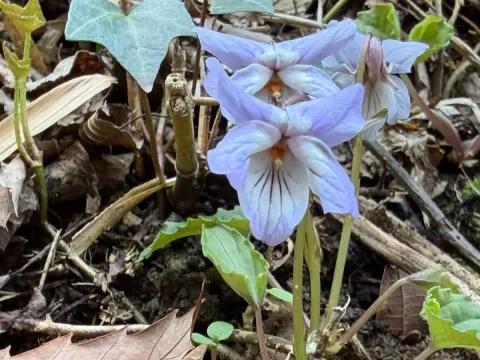
Bisset's violet
Viola bissetii
Bisset's violet (Viola bissetii) belongs to the Violaceae family. It is a perennial herbaceous plant naturally distributed in East Asia, including regions of China and Japan.
What the section contains
Bisset's violet
This species thrives in shaded environments with consistent soil moisture. It performs best in nutrient-rich, organic-based soils that provide good drainage to prevent waterlogging.
The plant exhibits a typical rosette growth form with kidney-shaped leaves. It is highly adapted to understory habitats, making it an excellent candidate for woodland gardens where light levels are restricted.
Cultivation requires careful monitoring of soil water status, as the root system is sensitive to both prolonged drought and excessive moisture that leads to root rot.
In terms of climate, it prefers cooler temperatures and humid air. Extreme heat can lead to wilting, therefore, planting in areas with natural shade or filtered sunlight is critical for survival.
The primary threats to Viola bissetii involve fungal diseases. Gray mold and various types of root rot are frequent issues caused by overly damp or stagnant air conditions.
Slugs and snails are the most significant pests, posing a severe threat to the foliage, especially during moist spring weather when the plant is in its active growth phase.
Aphids might occasionally infest the flower stalks, causing deformation and reducing the overall vigor of the plant during the blooming season.
Proper sanitation, including the removal of dead or decaying plant material, is essential to reduce the likelihood of pest and disease outbreaks in a garden bed.
If symptoms of infection appear, applications of sulfur-based fungicides or appropriate pest barriers are recommended to maintain the health of the violet patch.